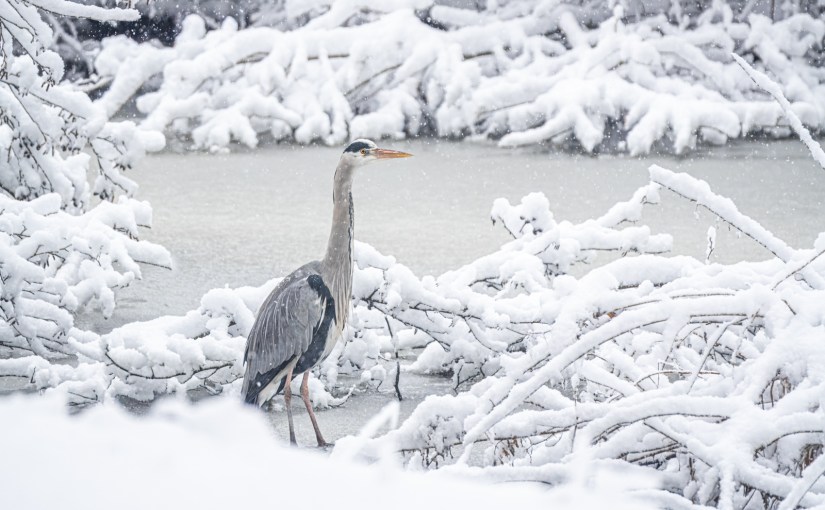
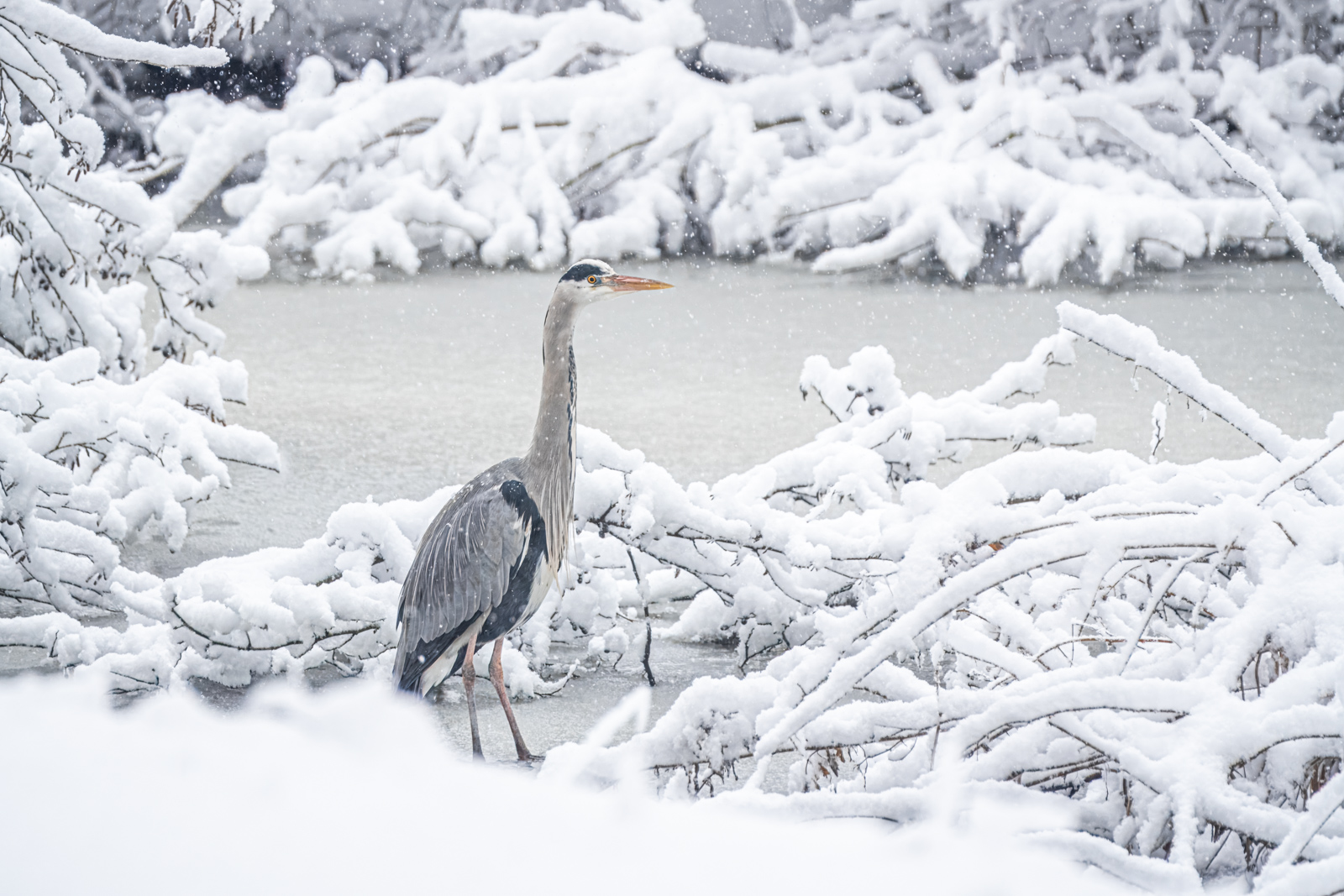
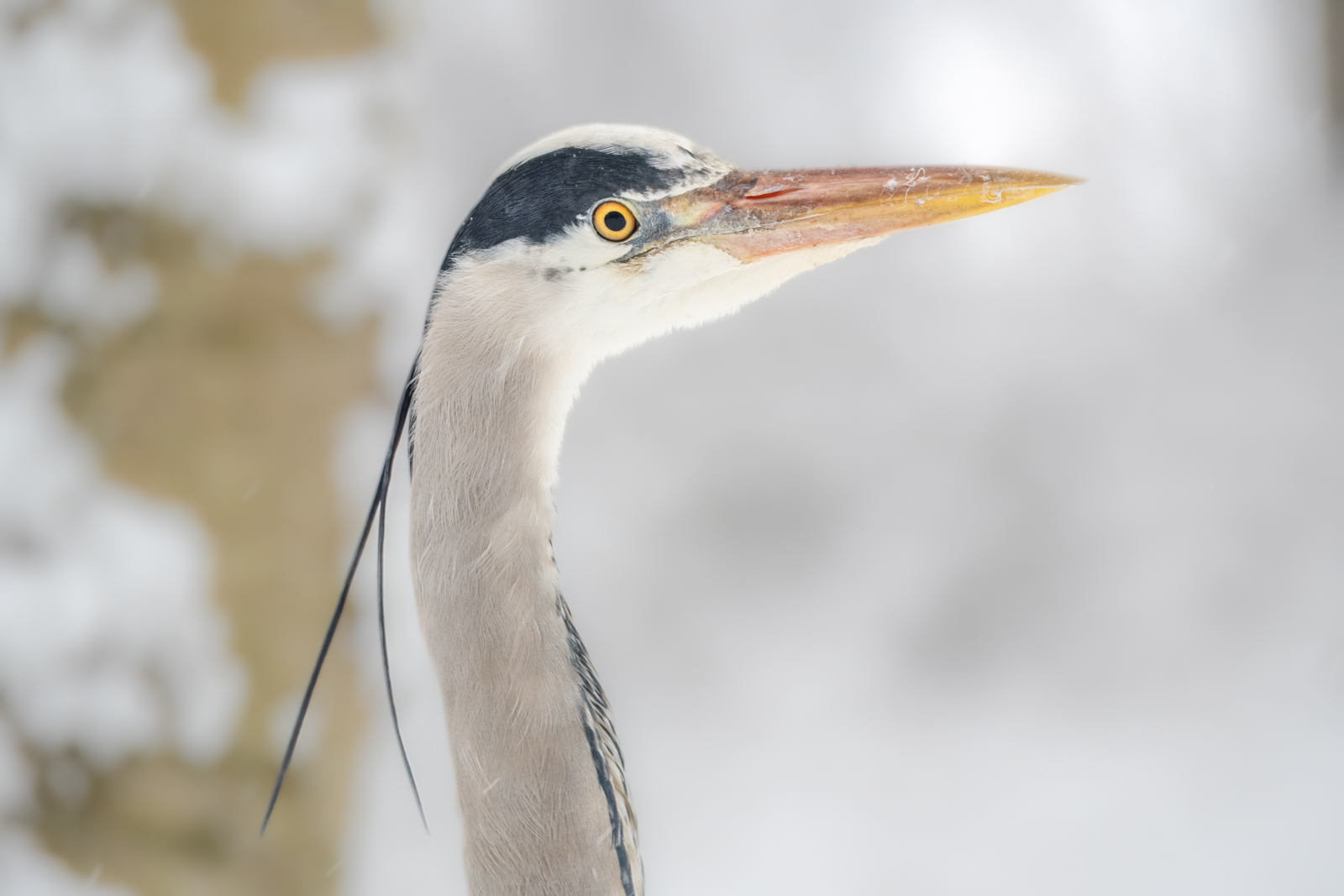
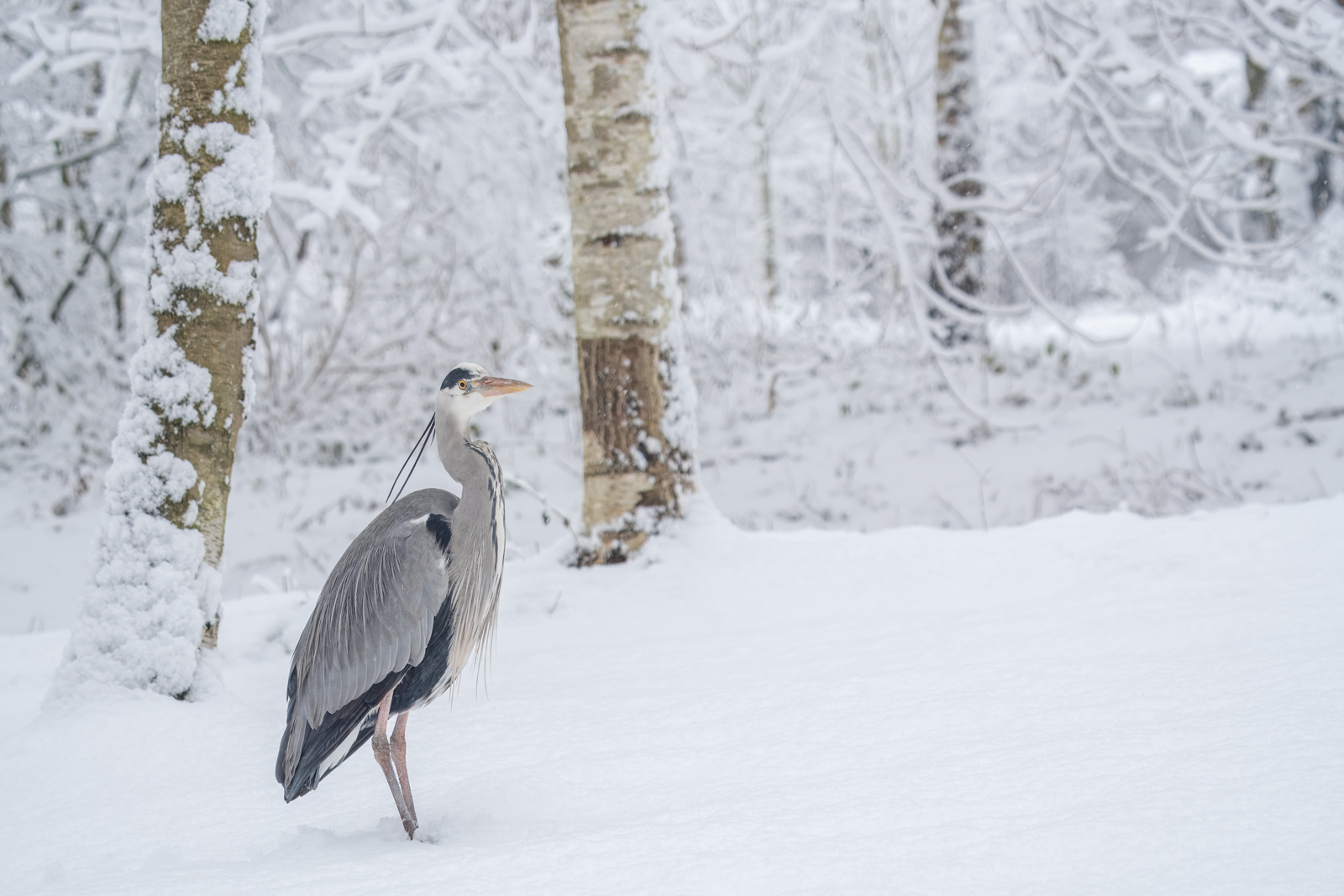
I’m sure I wasn’t the only photographer out there with my camera this Monday, right after the first snowfall of the year… We haven’t had such a thick layer of snow in years, and it resulted in fantastic images! In my local area: Bijlmerweide in Amsterdam Zuidoost, I was able to photograph this grey heron—first from a distance, in the landscape near the water, in the falling snow. Later, he gradually came closer.
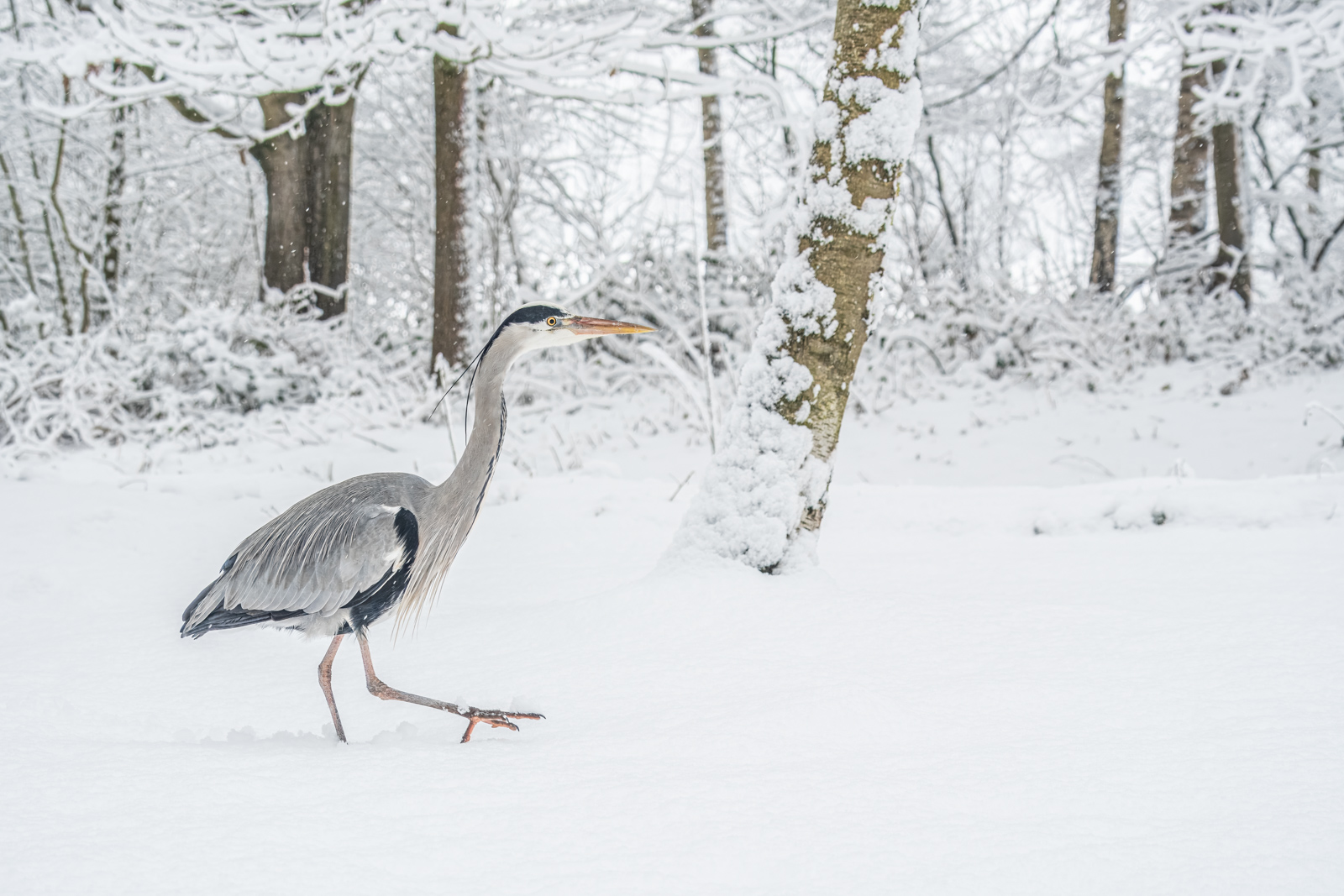
After watching me from a distance for a while, and then, to my surprise, walking straight towards me, it finally swerved and circled me with a stately, purposeful stride.
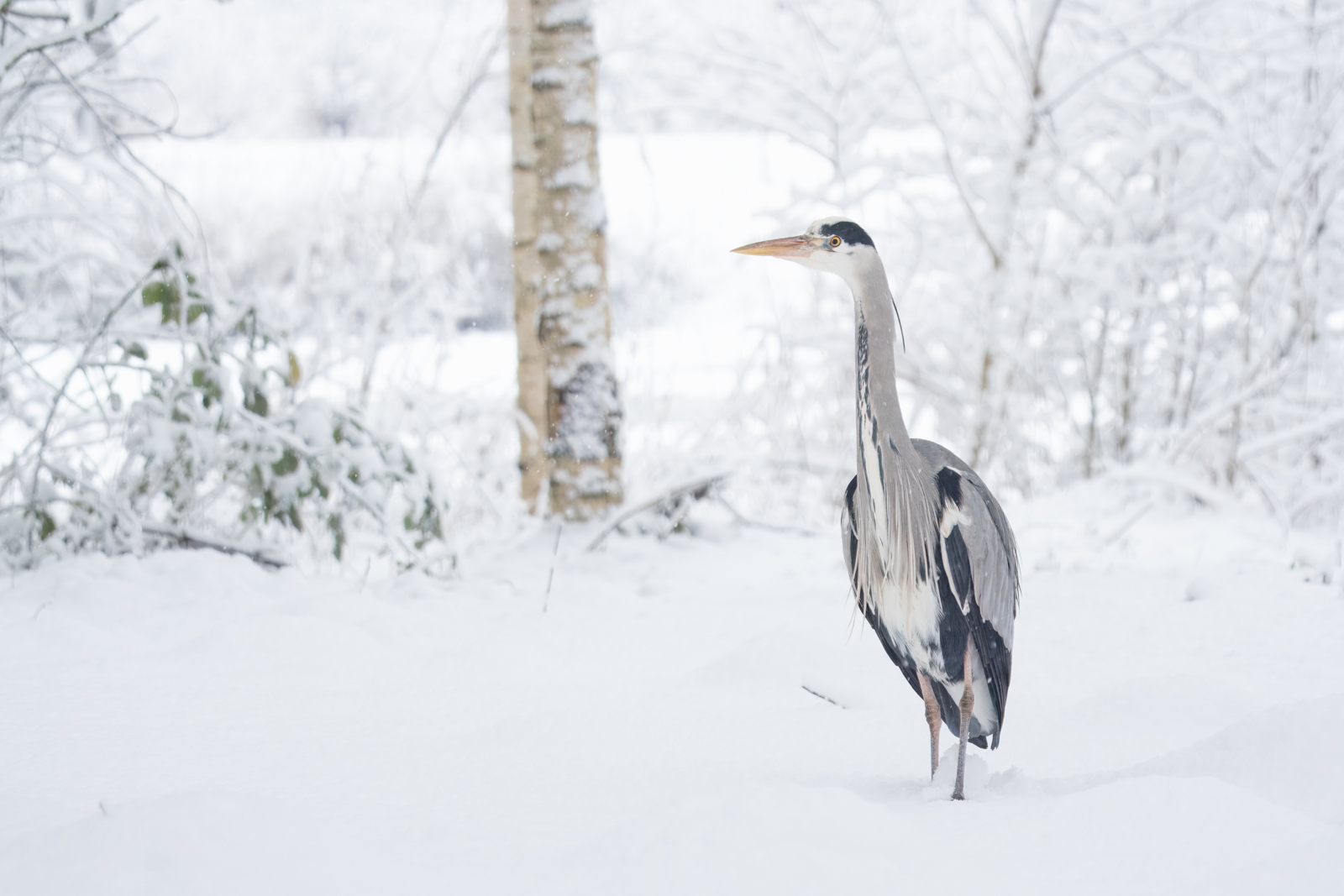
There it stood still again, watching me intently… so close now, and so relaxed, that I could easily get a close-up with the telephoto zoom…
A special experience: being stalked by a heron. Only much later did I realize that, because of the plastic bag around my camera, he probably thought he was going to be fed… So, begging heron! 😀 Too bad for him: I didn’t have any food with me either. But I did get a nice series of photos!
And the heron? … once he was truly convinced I had nothing to offer him, he took to the wing and slowly winged away, looking for a snack a little further away!
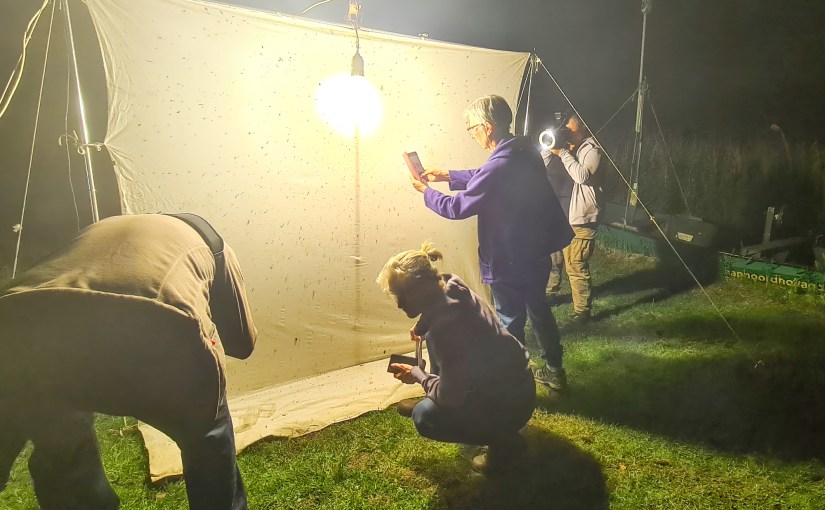
Two weeks ago we were able to participate for the first time in a Moth count led by Nico Dekker, Coordinator Butterfly Working Group (Vlinderwerkgroep) KNNV – Ilperveld, Landsmeer at Visitors Centre Landscape North Holland. What a special experience! Behind the visitors centre of the Ilperveld a white cloth measuring several metres was stretched, which was illuminated by a very strong, vibrating lamp. It was switched on as soon as it started to get dark, around 22:30, and immediately the first insects appeared: moths, but also beetles, flies, mosquitoes, and a lot of other small fry… Within no time there were hundreds of them. Quite a ticklish feeling!
Inventory and identification
A few people from the Butterfly Foundation and some other interested parties had quickly positioned themselves around the cloth, and took turns in an attempt to photograph and/or identify as many of these creepy crawlies as possible.
Hopwortelboorder – Hepialus humuli
Nico had an insect book with him to identify the various species, and here and there we were shown some beautiful species and given names. Apart from that I was mainly dependent on taking photos – in the hope that they would be good enough to have them identified later via Observation.org.
Photographing insects in the dark
Taking photos in the dark turned out to be even more complicated than expected. Everything moved, flew, hopped, crawled and hopped around, in such large numbers that you didn’t know where to look first, let alone how and where to focus. In addition, the flickering lamp appeared to project red horizontal lines on the canvas, which were not visible to the naked eye, but were visible in the photos. All photos were therefore significantly lightened in post-processing, sharpened and noise-free, and where possible the background was cleaned up a bit.
After sorting through hundreds of photos, and with a bit of luck and a lot of fiddling, you are moving from this :
It is unbelievable how many different species we saw that night! I was able to identify and name a total of 71 different species using Waarneming.nl. But there were many more. Beautiful creatures with often equally surprising and poetic names. The ‘top pieces’ of the evening for me were undoubtedly the Ermine Moth and the Rhinoceros Beetle. But certainly also some other gems that you can see below in my personal ‘top 10’. You can soon find a number of others on my website Photodeck Steppeland – Moth Count(work in progress…)
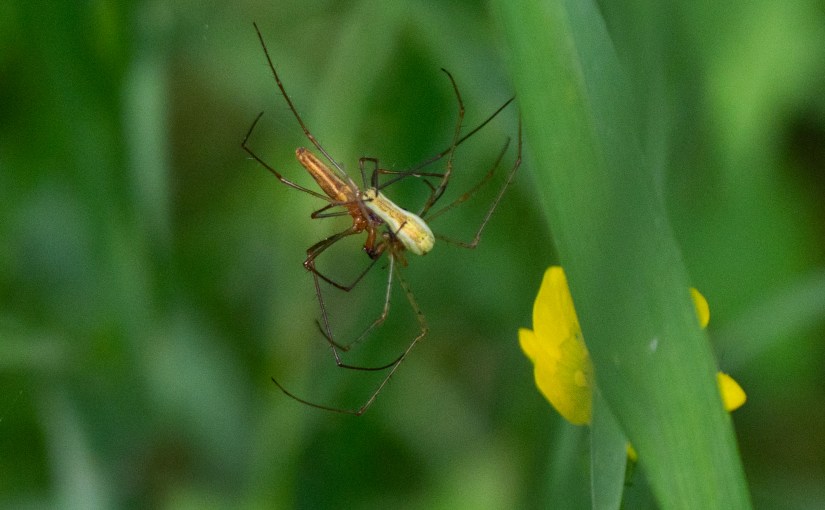
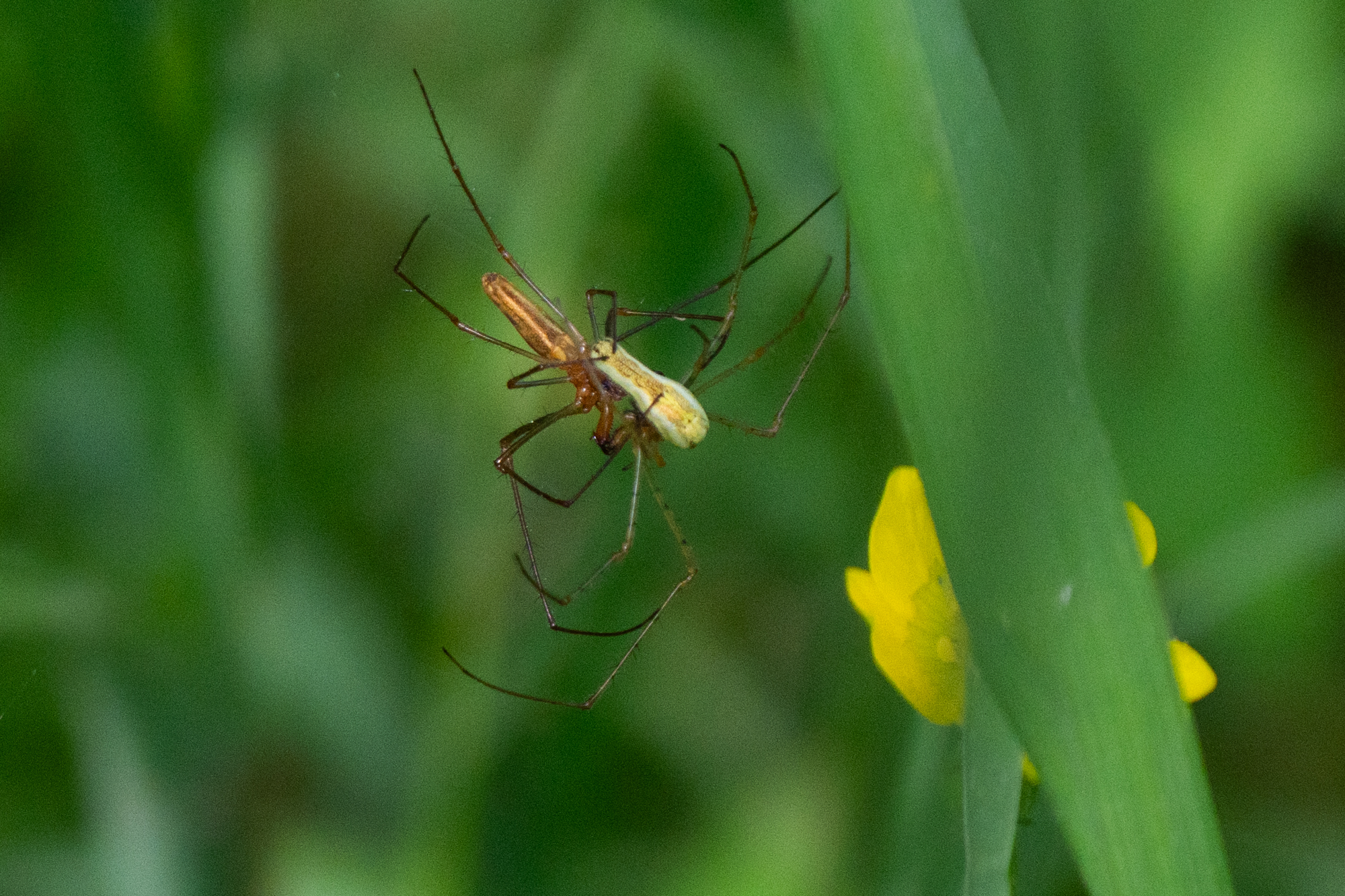
During our walk in Nature reserve the ‘Riethoek’ (Reedcorner, Amsterdam Zuidoost), looking for small creepy crawlies for our ‘1000 species year’ project, we were just focusing on a Long Jawed Spider when this happened:
Long Jawed spider male in stretch poseTaps a stretched web threadStrekspin vrouw verschijnt – bevruchtingFemale spider appears – fertilizationThreads come out of the abdomenA net is being madeYellow eggs are addedEgg package almost readyMating Long Jawed spiders Family Tetragnathidae – species still unknown. 2025-05-31 Riethoek, Amsterdam Zuidoost
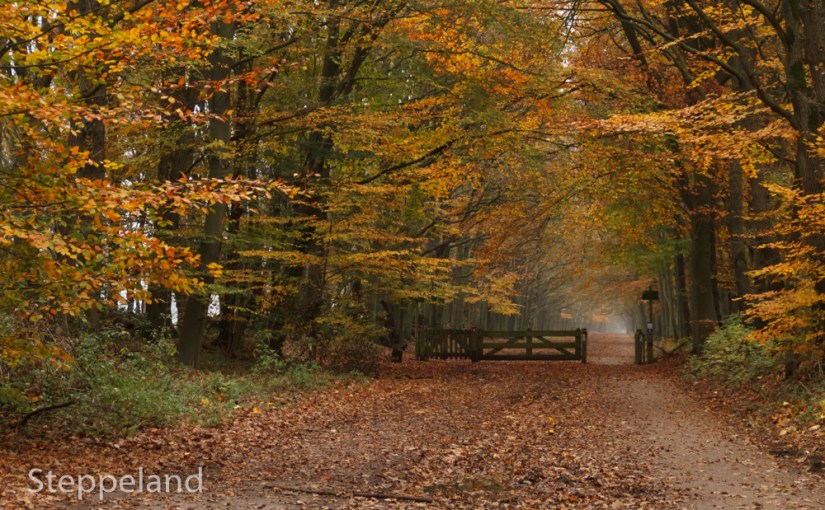
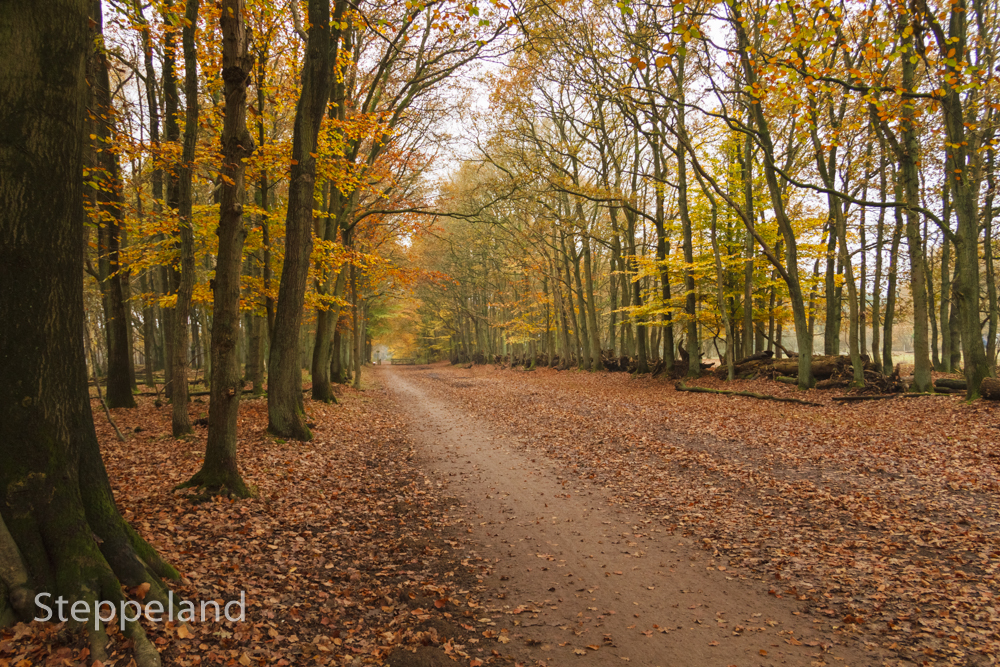
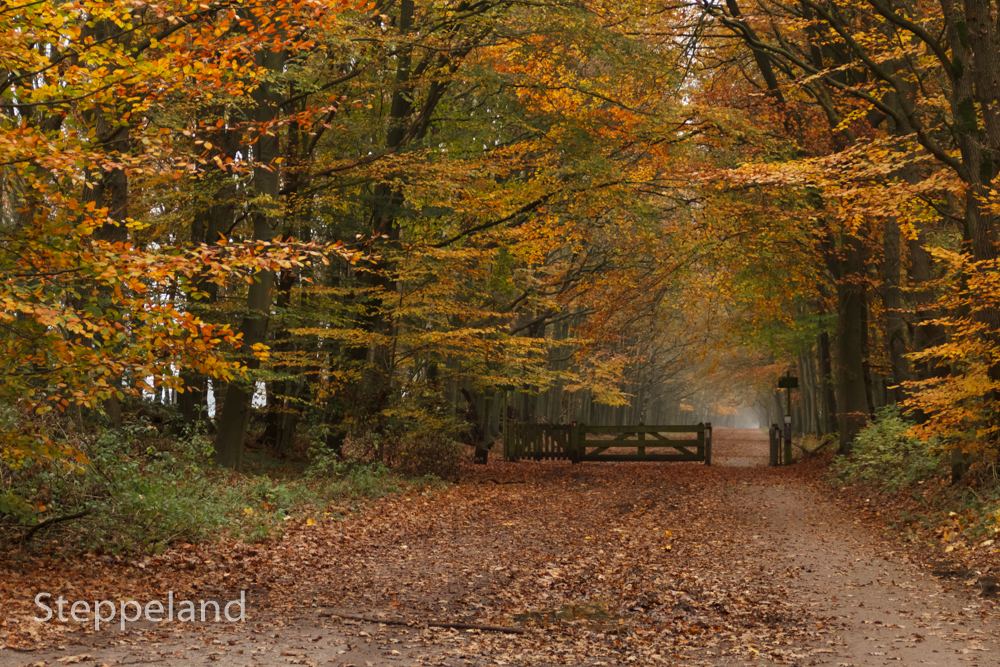
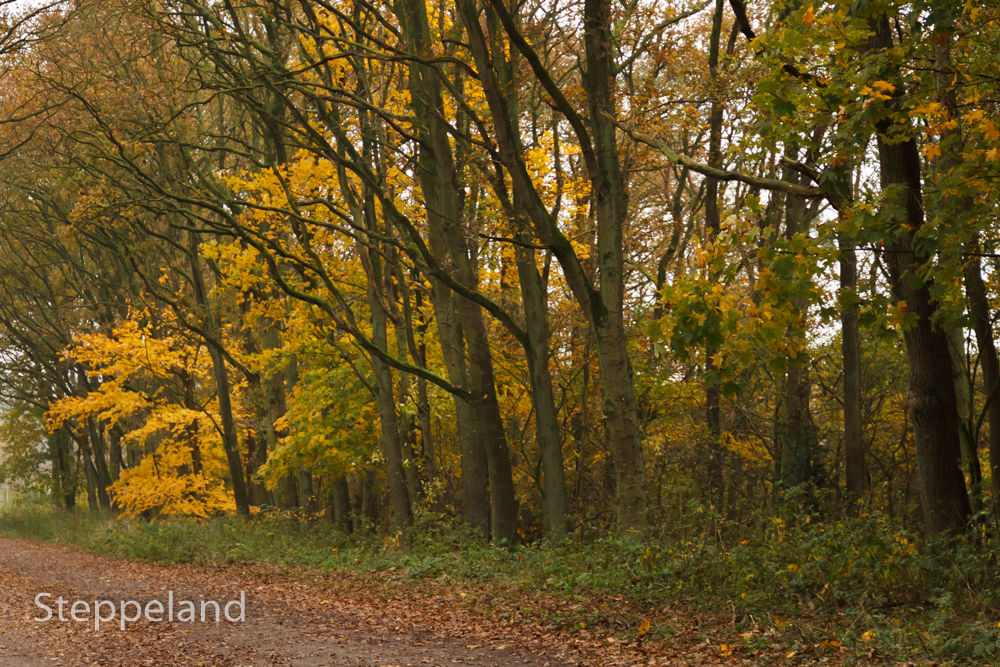
Even on a dreary autumn day, the woods in autumn have a wonderful mood and atmosphere. Photo’s made in the Westerheide near Bussum, part of the Goois Nature Reserve, the Netherlands
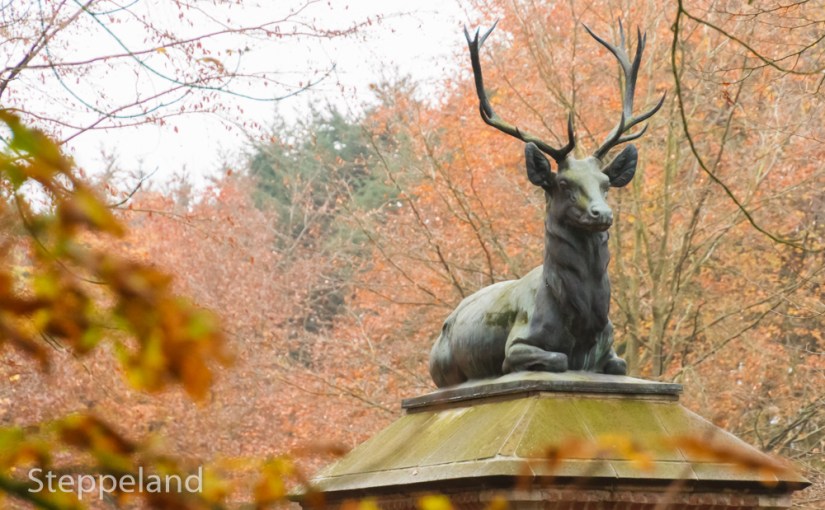
With these two majestic deer statues, photographed in the woods of Palace Het Loo, I will end this little series about Palace het Loo. All these images were made in Crown Domain ‘het Loo’, Apeldoorn, the Netherlands, during a panel testing day with the Tamron 16-300 mm F3,5-6,3 DiII VC PZD zoom – organized by the Dutch photography Magazine ‘Focus’ . Hope you enjoyed checking them out!
Majestic deer statue on a gate post in the Palace woods
Photographed in Crown Domain ‘het Loo’, Apeldoorn, the Netherlands, during a panel testing day with the Tamron 16-300 mm F3,5-6,3 DiII VC PZD zoom – organized by the Dutch photography Magazine ‘Focus’ .
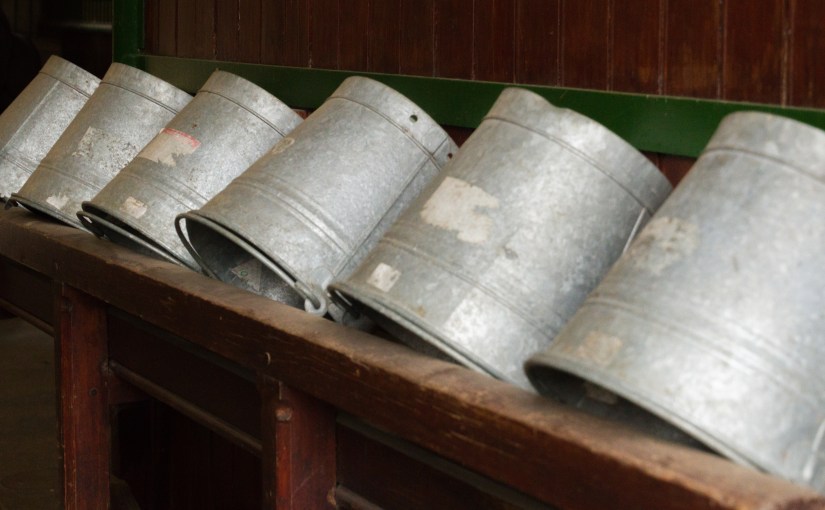
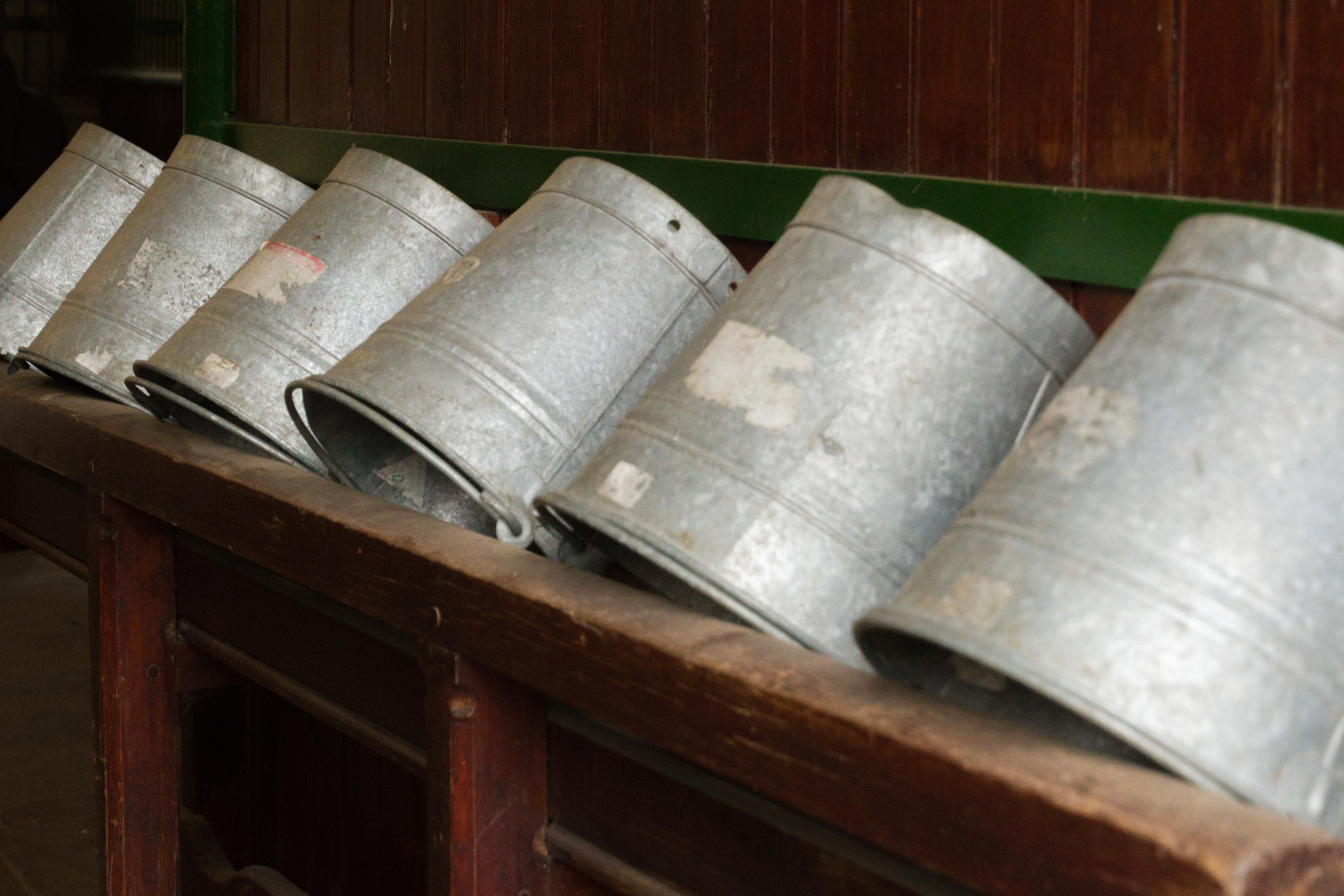
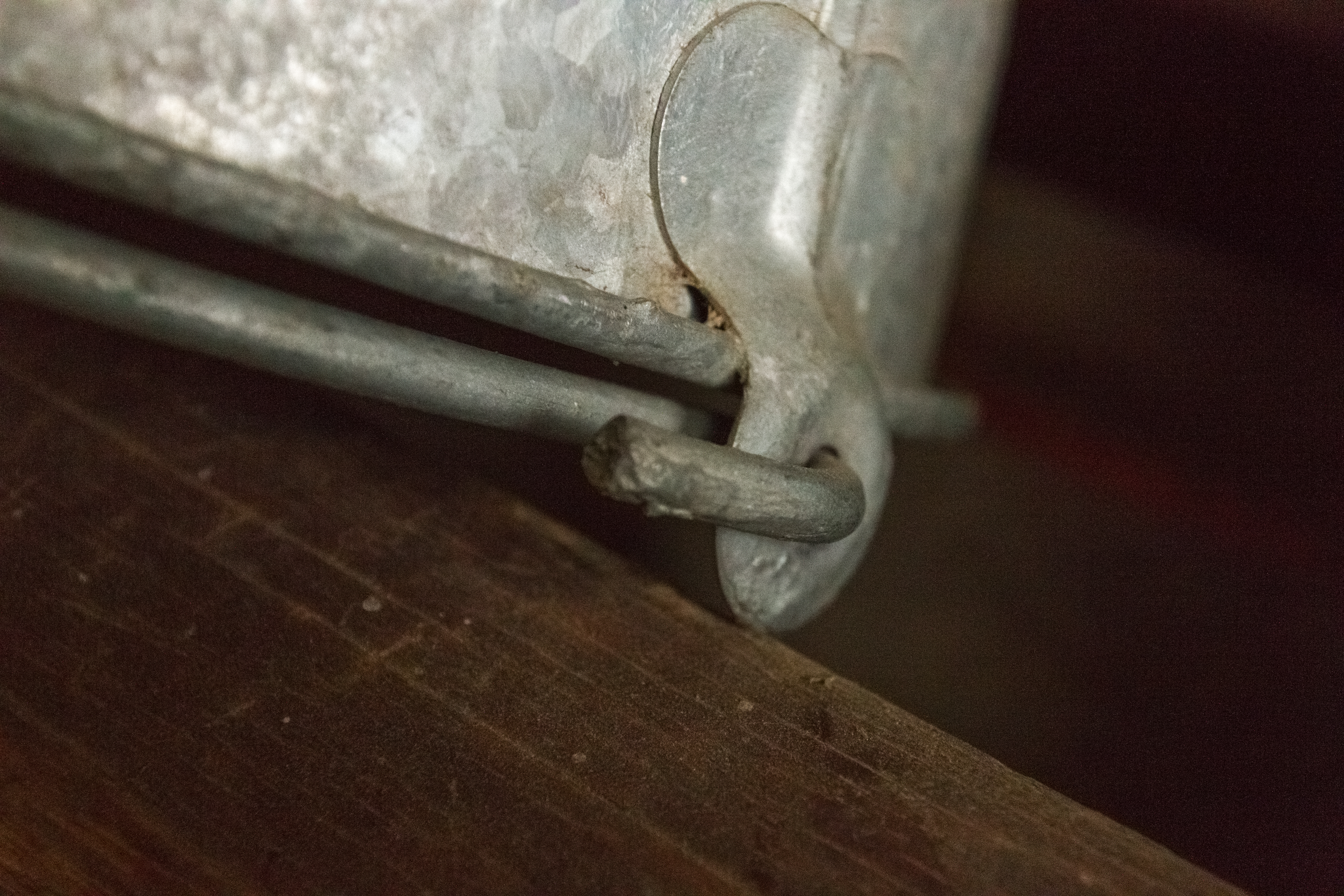
Even in the Royal Stables buckets are still buckets
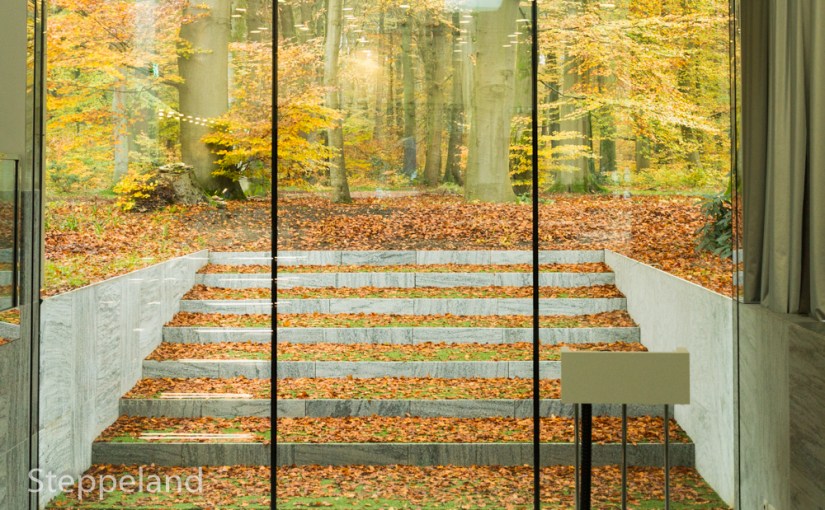
Entree building of Palace Het Loo, modern architecture by architect Koen van Velsen. The combination of windows, stairs, mirrors and reflections of the autumn landscape outside makes for a abstract impression . Photographed in Crown Domain ‘het Loo’, Apeldoorn, the Netherlands, during a panel testing day with the Tamron 16-300 mm F3,5-6,3 DiII VC PZD zoom – organized by the Dutch photography Magazine ‘Focus’ .
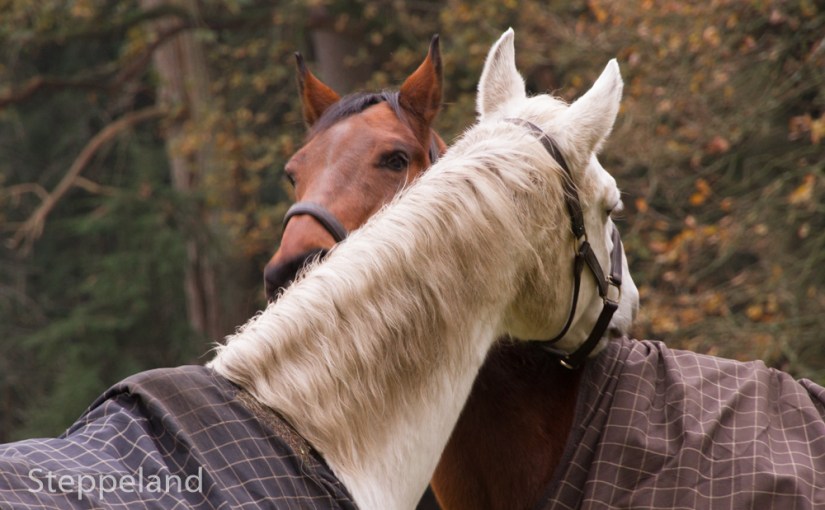
Two horse, a white and a brown one, in one of the meadows of the Royal Crown Domain ‘Het Loo’ – I experimented further with the Tamron 16-300 mm F3,5-6,3 DiII VC PZD zoom – from tele to wide angle, from very high to shallow depth of field… I’m quite happy with the result of this little series!
Yesterday I participated in a testing panel day, organized by the Dutch photography magazine “Focus”. A group of 12 readers was invited to try out the new, award winning Tamron 16-300 mm F3,5-6,3 DiII VC PZD zoom lens.
16 mm wide angle to 300 mm zoom in one lens… what does that look like?
Well, we went to the Royal Palace “Het Loo” in Apeldoorn, where we could experiment with this awesome lens.
Here is what it looks like:
Royal Stables Palace ‘Het Loo’ – 16mm wide angle
Mare and foal on the weather vane of the Royal stables – 300 mm tele
Such a reach, all within one lens, isn’t that amazing??!!













 Discovering Beauty