Deze blog post in het Nederlands (link)

Also named crested cariama
Deze blog post in het Nederlands (link)
Also named crested cariama
Deze blog post in het Nederlands (link)

Photo made in Artis Amsterdam zoo, October 28, 2014
Deze blog post in het Nederlands (link)

I hope you don’t mind that I’m posting another Orang Utan photo today, Even though it has just a slight motion blur, I didn’t want to withhold it from you 😉
More info about Orang Utan, you can find in my previous post here: Orang Utan – Read my thoughts
Deze blog post in het Nederlands (link)
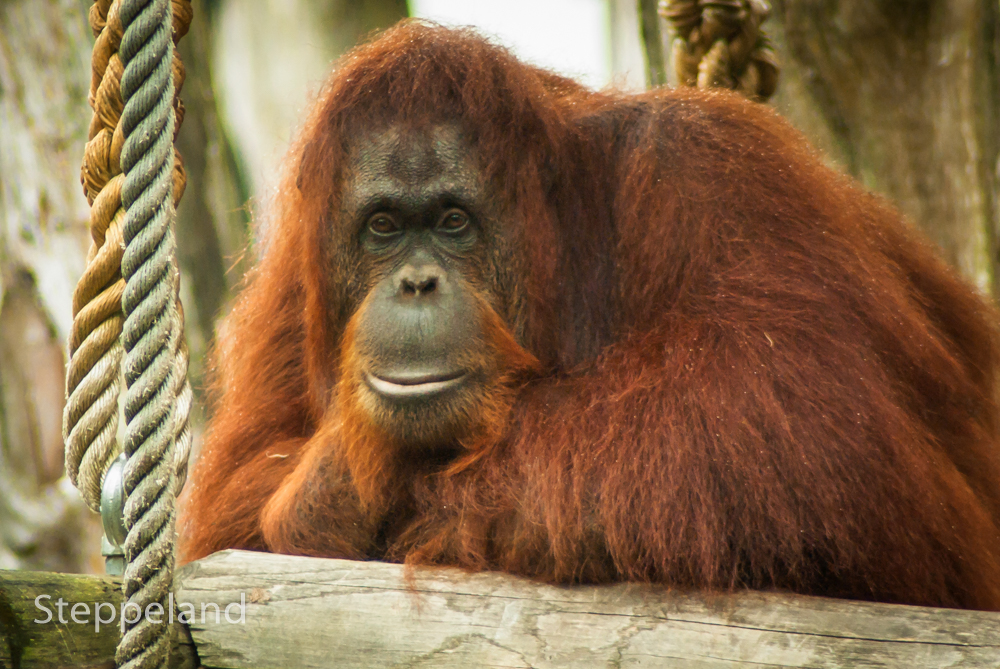
Orangutan with pensive eyes – could we only read it’s thoughts… Photographed in Apenheul zoo, Apeldoorn, the Netherlands
Orangutan
Quote:
“The orangutans are the two exclusively Asian species of extant great apes. Native to Indonesia and Malaysia, orangutans are currently found in only the rainforests of Borneo and Sumatra.
The name “orangutan” (also written is derived from the Malay and Indonesian words orang meaning “person” and hutan meaning “forest”, thus “person of the forest”.
Orangutans are the most arboreal of the great apes and spend most of their time in trees. Their hair is typically reddish-brown, instead of the brown or black hair typical of chimpanzees and gorillas. Males and females differ in size and appearance. Dominant adult males have distinctive cheek pads and produce long calls that attract females and intimidate rivals. Younger males do not have these characteristics and resemble adult females. Orangutans are the most solitary of the great apes, with social bonds occurring primarily between mothers and their dependent offspring, who stay together for the first two years. Fruit is the most important component of an orangutan’s diet; however, the apes will also eat vegetation, bark, honey, insects and even bird eggs. They can live over 30 years in both the wild and captivity.
Conservation status
During the early 2000s, orangutan habitat has decreased rapidly due to logging and forest fires, as well as fragmentation by roads. A major factor in that period of time has been the conversion of vast areas of tropical forest to palm oil plantations in response to international demand. Palm oil is used for cooking, cosmetics, mechanics, and biodiesel. Hunting is also a major problem as is the illegal pet trade. Orangutans may be killed for the bushmeat trade, crop protection, or for use for traditional medicine. Mother orangutans are killed so their infants can be sold as pets, and many of these infants die without the help of their mother.
As a result of all this, both species are on the IUCN Red List of Mammals. The Sumatran species is critically endangered and the Bornean species is endangered.” Source: Wikipedia
Bekijk mijn parallel blog in het NEDERLANDS
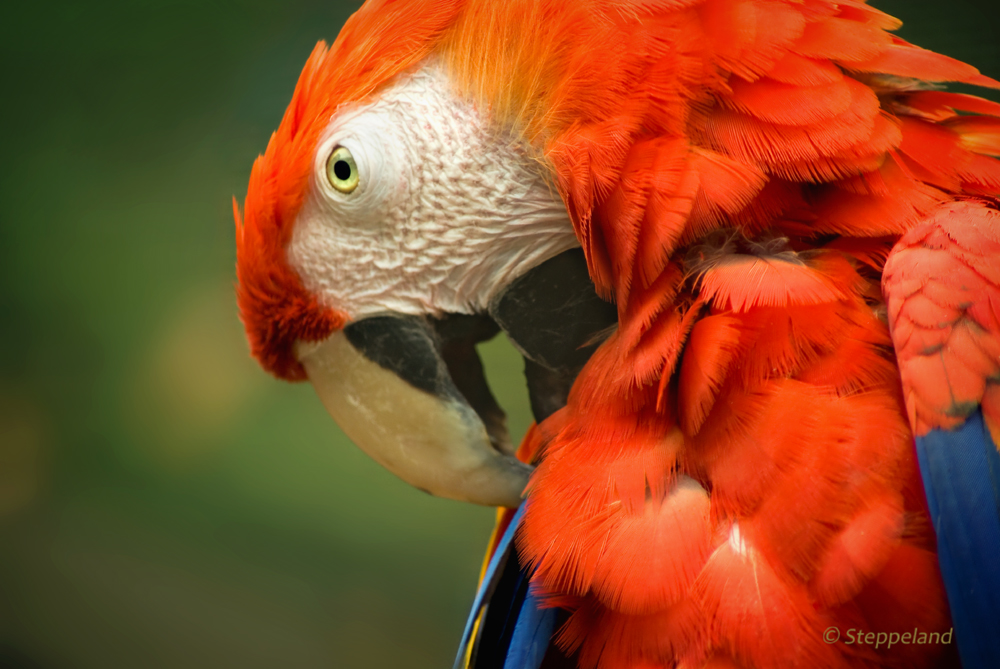
Another beautiful bird, photographed in Pairi Daiza, a marvellous themed zoo in Brugelette, Belgium
This red, blue and yellow parrot, the Scarlet Macaw (Ara macao), is native to humid evergreen forests of tropical South America. It has suffered from local extinction through habitat destruction and capture for the parrot trade, but locally it remains fairly common. This colourful parrot is on the IUCN list of threatened species, status: Least concern (source: Wikipedia)
Bekijk mijn parallel blog in het NEDERLANDS
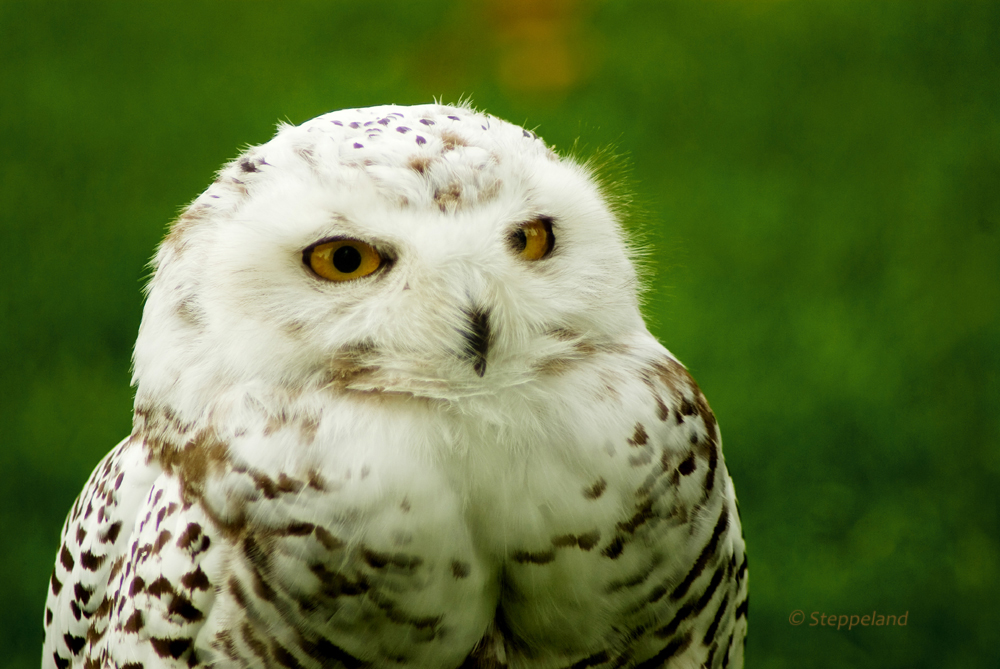
This Snowy Owl was photographed in Pairi Daiza zoo, a marvellous themed zoo on the grounds of a previous abbey in Brugelette, Belgium.
The Snowy Owl (Bubo scandiacus) is a large owl, typically found in the northern circumpolar region, where it makes its summer home north of latitude 60 degrees north. However, it is a particularly nomadic bird, and because population fluctuations in its prey species can force it to relocate, it has been known to breed at more southerly latitudes. (source: Wikipedia )

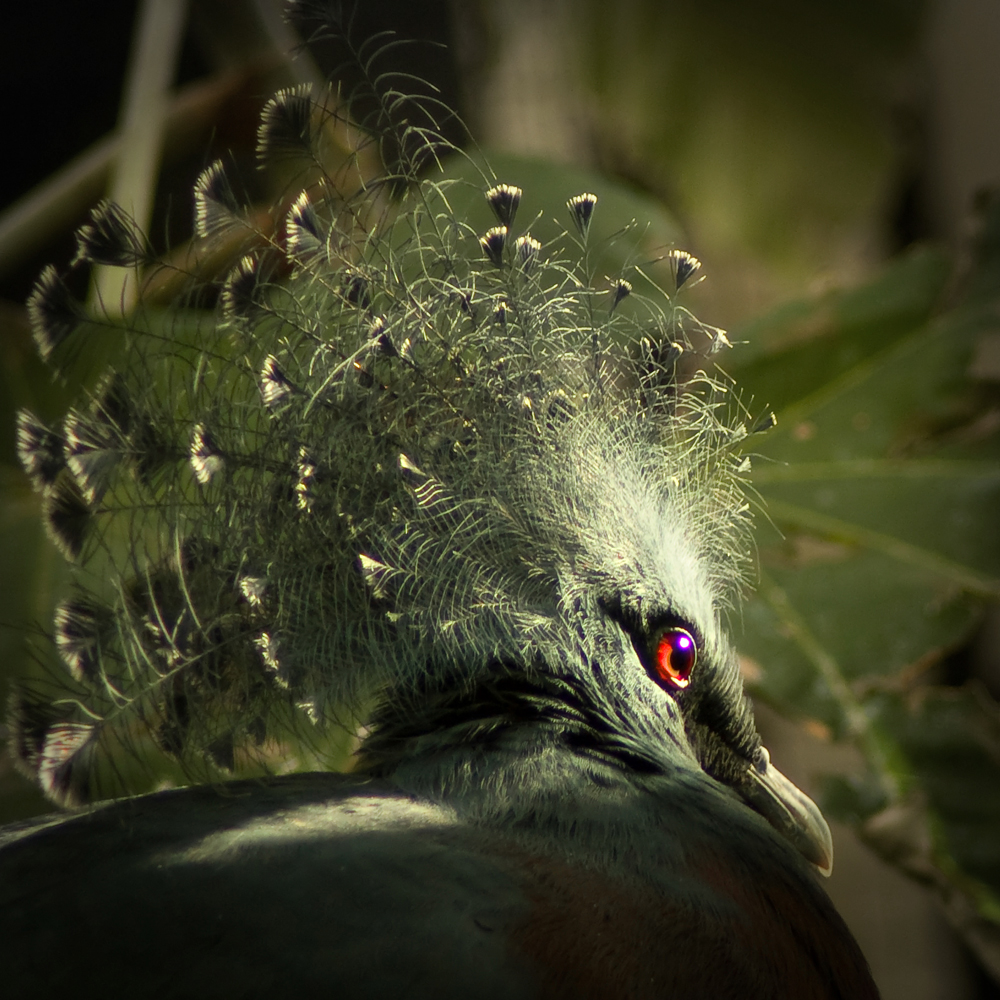
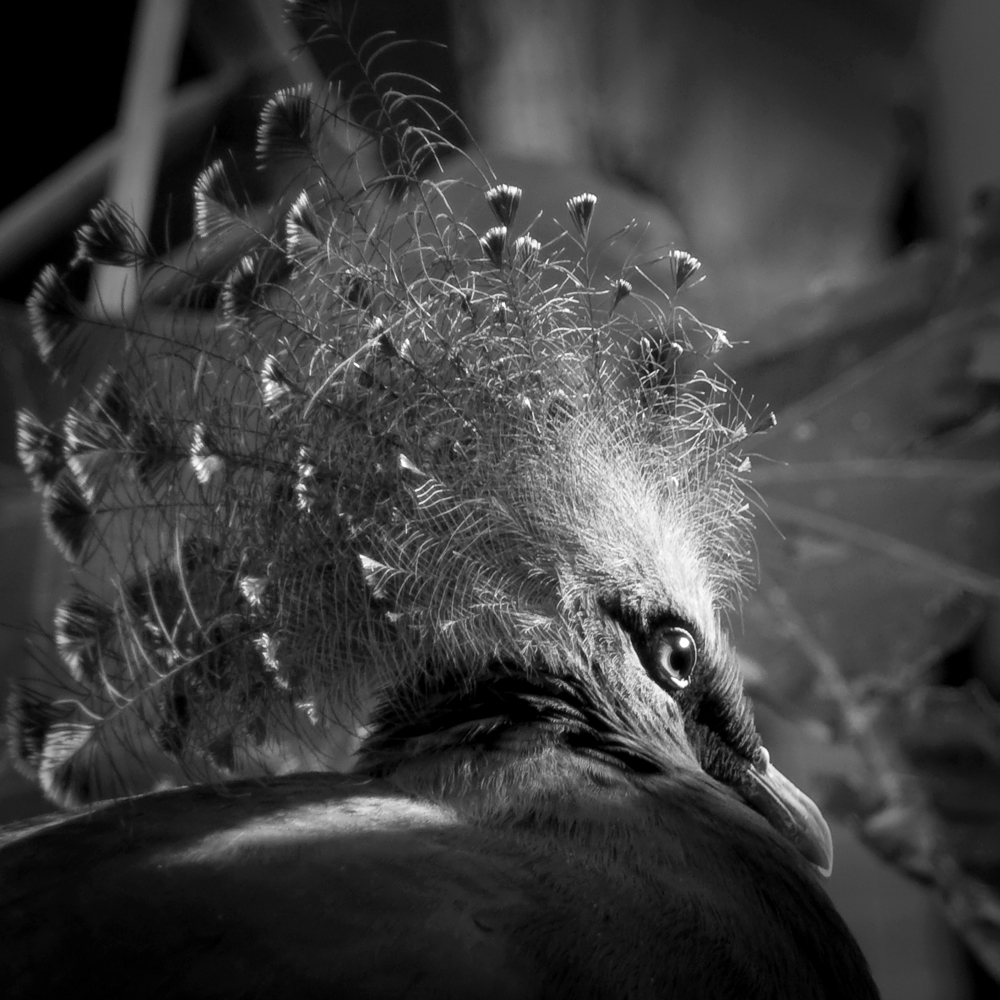
“The Victoria Crowned Pigeon, Goura victoria, is a large, bluish-grey pigeon with elegant blue lace-like crests, maroon breast and red iris. The bird may be easily recognized by the unique white tips on its crests.
It is distributed in the lowland and swamp forests of northern New Guinea and surrounding islands. Its diet consists mainly of fruits, figs, seeds and invertebrates. The female usually lays a single white egg.
Due to continuing habitat loss, being tame and easily hunted for its plumes and meat, the Victoria Crowned Pigeon is evaluated as Vulnerable on the IUCN Red List of Threatened Species. ” (Source: Wikipedia)
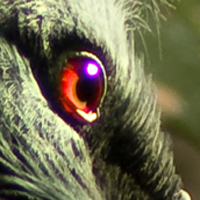 It’s a beautiful bird indeed –
Due to the light reflection, the normally red eye turned partially purple here… amazing…
And this is the black-and-white version…

Burrowing Owl (Athene cunicularia) photographed in Artis Amsterdam Zoo today – Such a warm and soft plumage, and such big eyes… – cute little thing 🙂
Of course I made a lot more photo’s but this was one of the first ones I edited, so, liked to share it here already..
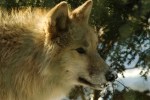
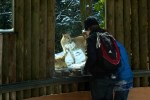
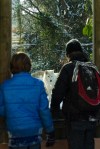
It’s already a few weeks on Saturdays that I’ve been following a photography course in Artis Amsterdam zoo. Last Saturday, it was the 3d out of 4 meetings, and our assignment of the day was to make a photo-story with a series of images. We had the first snow just a day before, so it was a special occasion to make photo’s on a snowy but sunny day in Artis. I had hoped that maybe I could go make some pics at the Arctic wolves’ enclosure that day, because I knew that a new group of wolves had arrived at the zoo some time last year, and some months a go, the news had been spread that three young wolves were born. So since I hadn’t been able to go see them yet, this assignment would make for a great opportunity to go see what was happening at the wolves’ .
I must say, I really was lucky with the photo-opportunities, and enjoyed my afternoon with the wolves, and those two boys, they did too 😉 …
“Two boys and the wolves…”
– Artis Amsterdam Zoo – a photo-story … :





 Discovering Beauty