I'm a nature and documentary photographer, Flemish from origin and living in the Netherlands. Trained as a social worker and member of an international group of women who care about wholeness and healing, I combine my love for creation, people and cultures in the images I make.
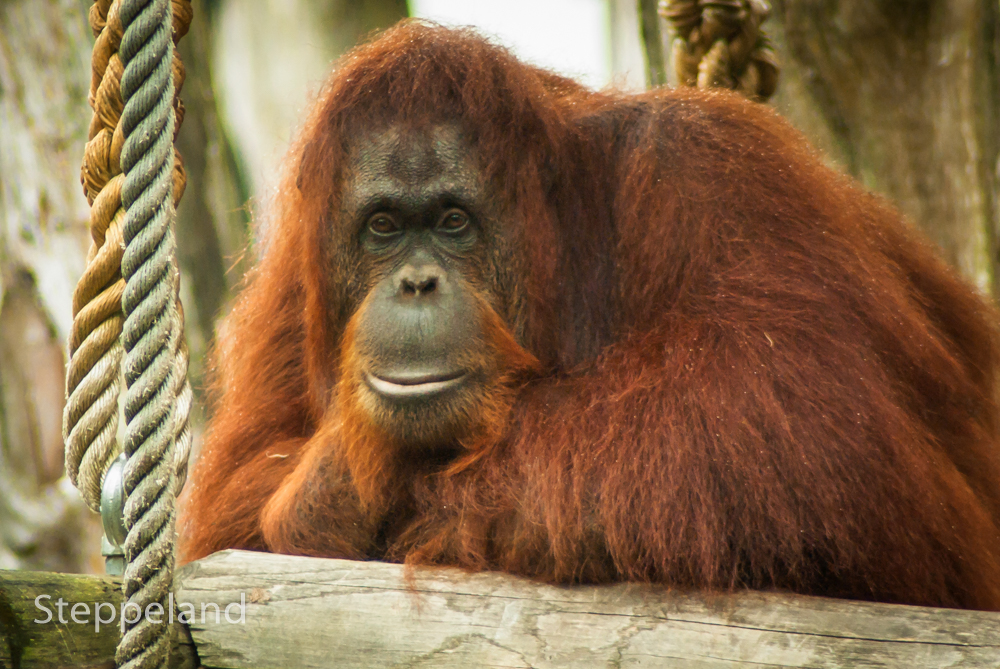
I hope you don’t mind that I’m posting another Orang Utan photo today, Even though it has just a slight motion blur, I didn’t want to withhold it from you 😉
Orangutan with pensive eyes – could we only read it’s thoughts… Photographed in Apenheul zoo, Apeldoorn, the Netherlands
Orangutan
Quote:
“The orangutans are the two exclusively Asian species of extant great apes. Native to Indonesia and Malaysia, orangutans are currently found in only the rainforests of Borneo and Sumatra.
The name “orangutan” (also written is derived from the Malay and Indonesian words orang meaning “person” and hutan meaning “forest”, thus “person of the forest”.
Orangutans are the most arboreal of the great apes and spend most of their time in trees. Their hair is typically reddish-brown, instead of the brown or black hair typical of chimpanzees and gorillas. Males and females differ in size and appearance. Dominant adult males have distinctive cheek pads and produce long calls that attract females and intimidate rivals. Younger males do not have these characteristics and resemble adult females. Orangutans are the most solitary of the great apes, with social bonds occurring primarily between mothers and their dependent offspring, who stay together for the first two years. Fruit is the most important component of an orangutan’s diet; however, the apes will also eat vegetation, bark, honey, insects and even bird eggs. They can live over 30 years in both the wild and captivity.
Conservation status
During the early 2000s, orangutan habitat has decreased rapidly due to logging and forest fires, as well as fragmentation by roads. A major factor in that period of time has been the conversion of vast areas of tropical forest to palm oil plantations in response to international demand. Palm oil is used for cooking, cosmetics, mechanics, and biodiesel. Hunting is also a major problem as is the illegal pet trade. Orangutans may be killed for the bushmeat trade, crop protection, or for use for traditional medicine. Mother orangutans are killed so their infants can be sold as pets, and many of these infants die without the help of their mother.
As a result of all this, both species are on the IUCN Red List of Mammals. The Sumatran species is critically endangered and the Bornean species is endangered.” Source: Wikipedia
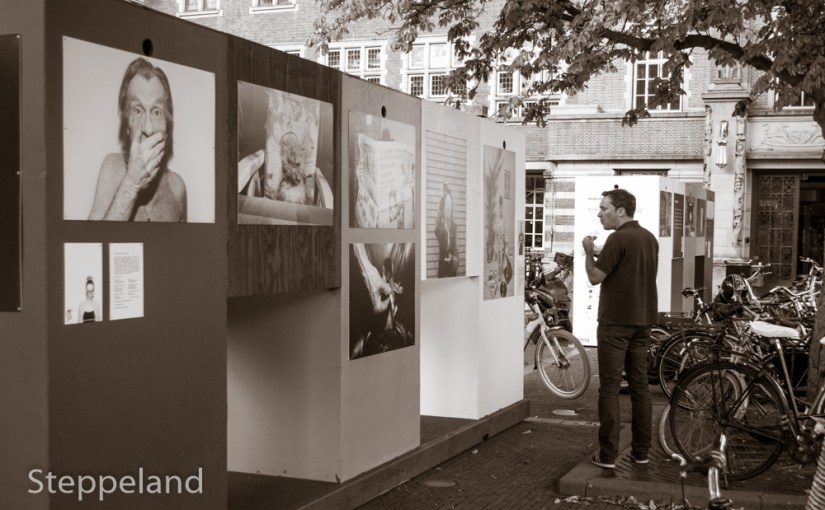
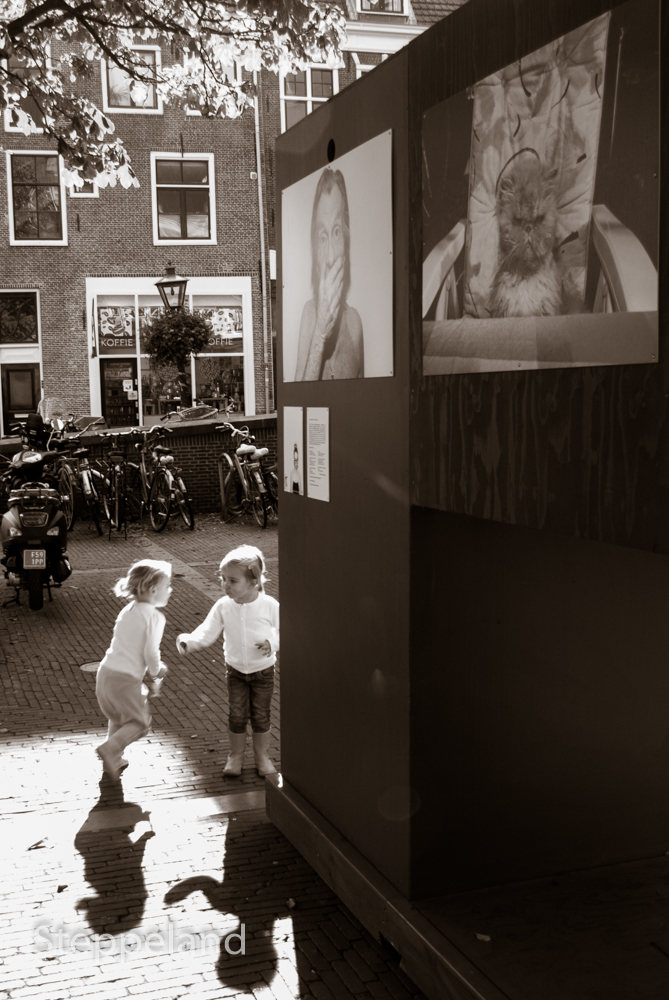
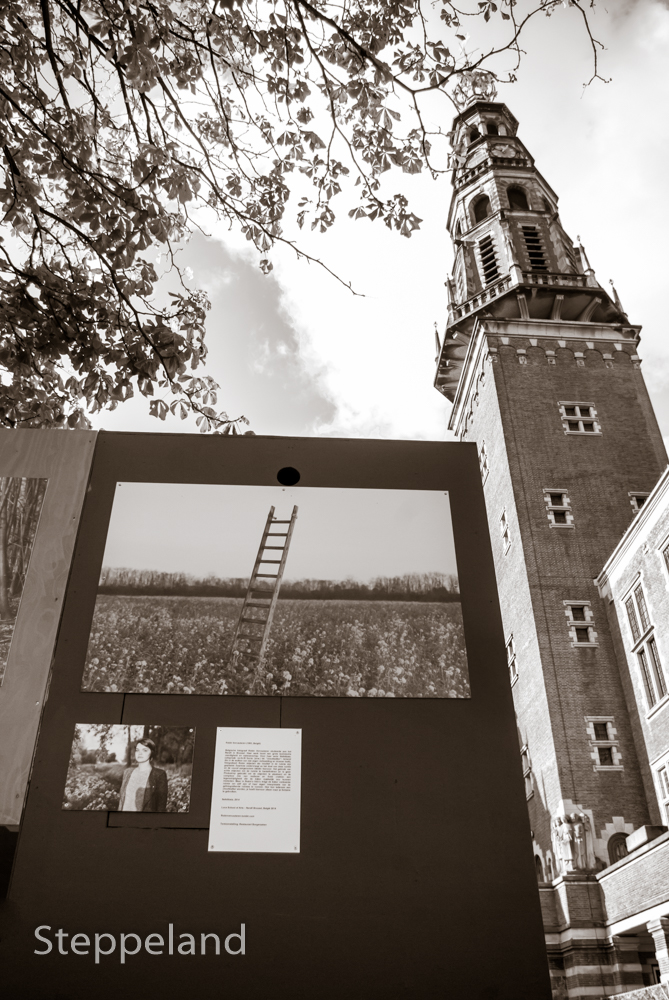
Last week I was in Leiden for the International Photo Festival. I wanted to make a photo story about it for Demotix. And if you were able to follow my blogs these past days, then you know already that this wasn’t the only thing I photographed… Indeed, after a very long day, I came home with over 800 photo’s and enough material to make not just one, but at least 4 photo stories! And I wasn’t bored for one moment!
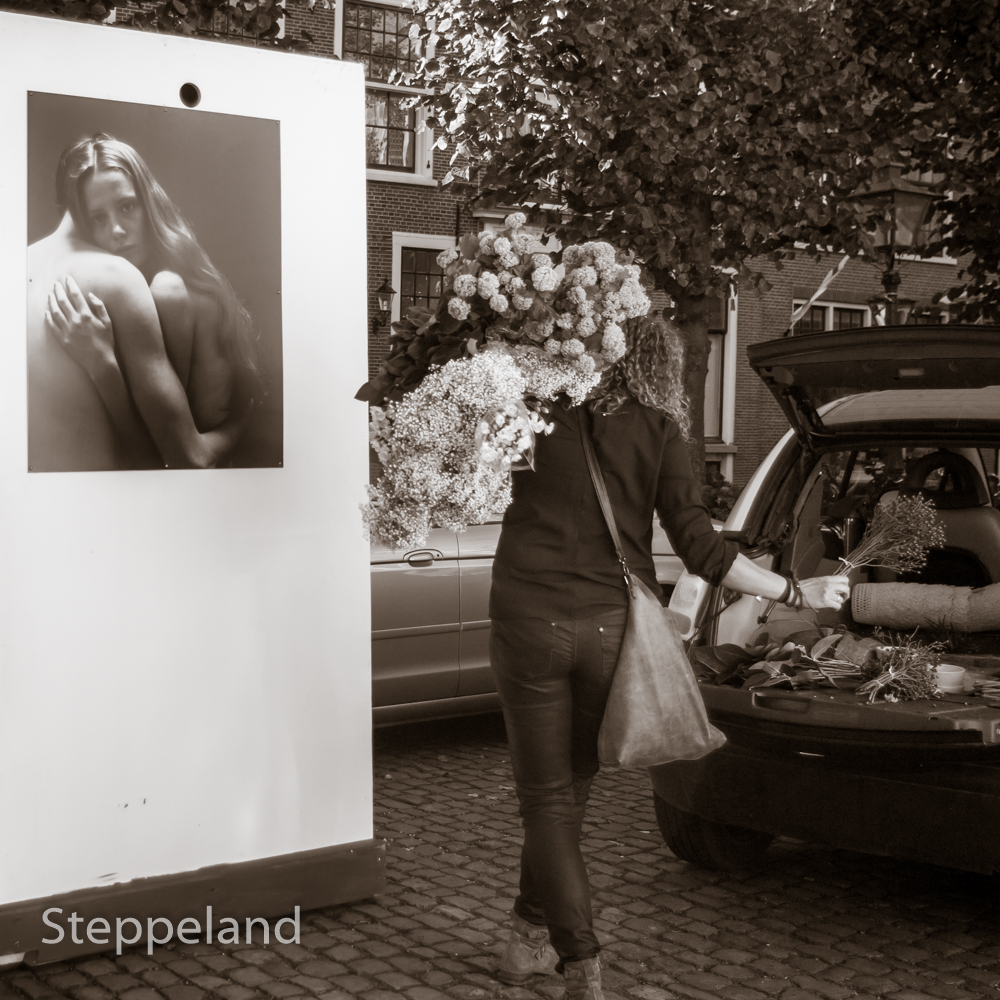
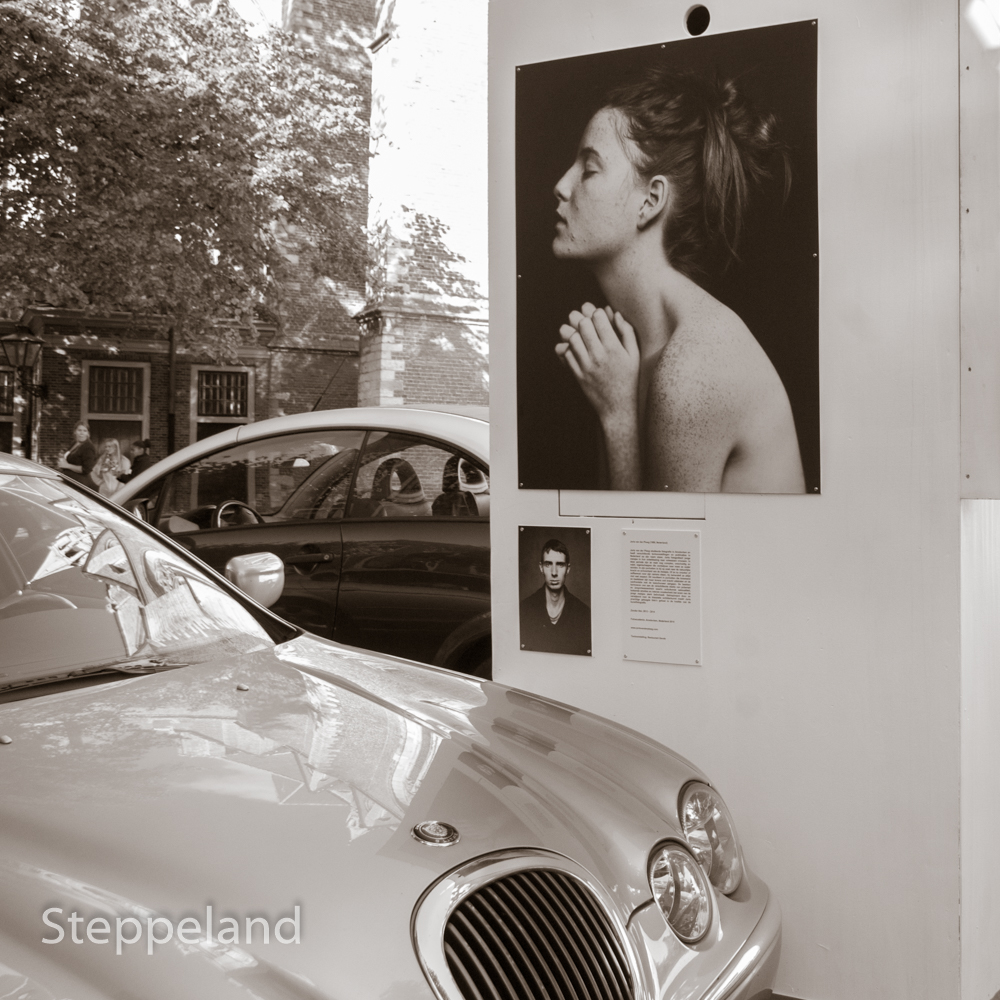
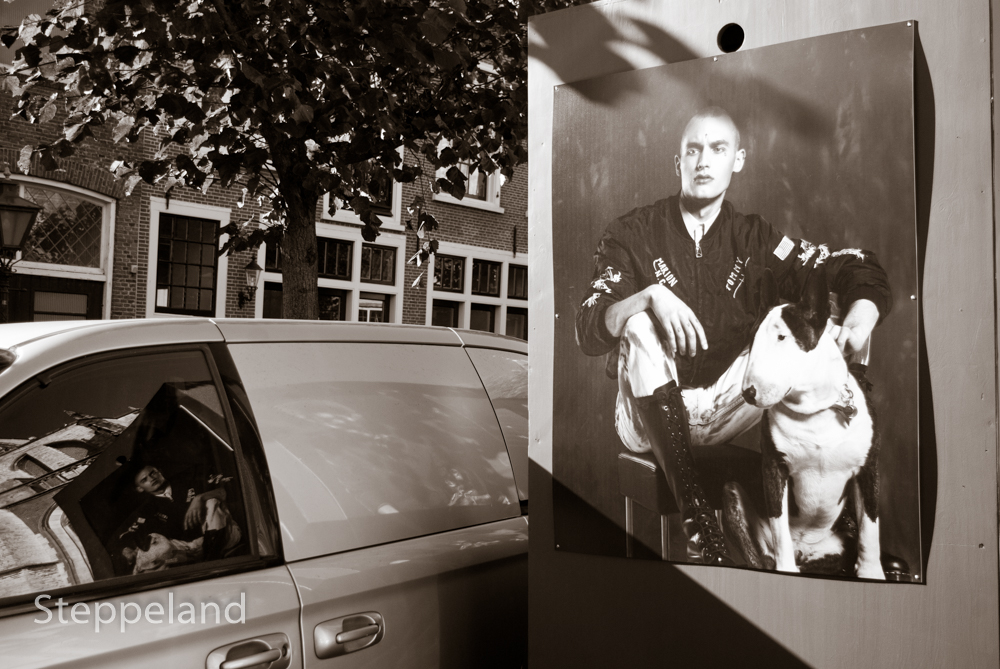
Ten of my own favourites of this series, I’ve selected for this blog. Some of them are also on Demotix, in colour, but there are some others that didn’t fit into the Demotix series, and I’d like to show those here. I transmitted them all into a nice light sepia.
I think that this series gives a very nice impression of the Photo Festival, and my interpretation of it. So I’m really happy to show them to you here.
About the International Photo Festival Leiden
The second International Photo Festival Leiden takes place in the autumn of 2014, Oct 11 till Nov 8. It aims at providing a platform for young talented, professional photographers, by giving them a chance to expose themselves to a broader audience.
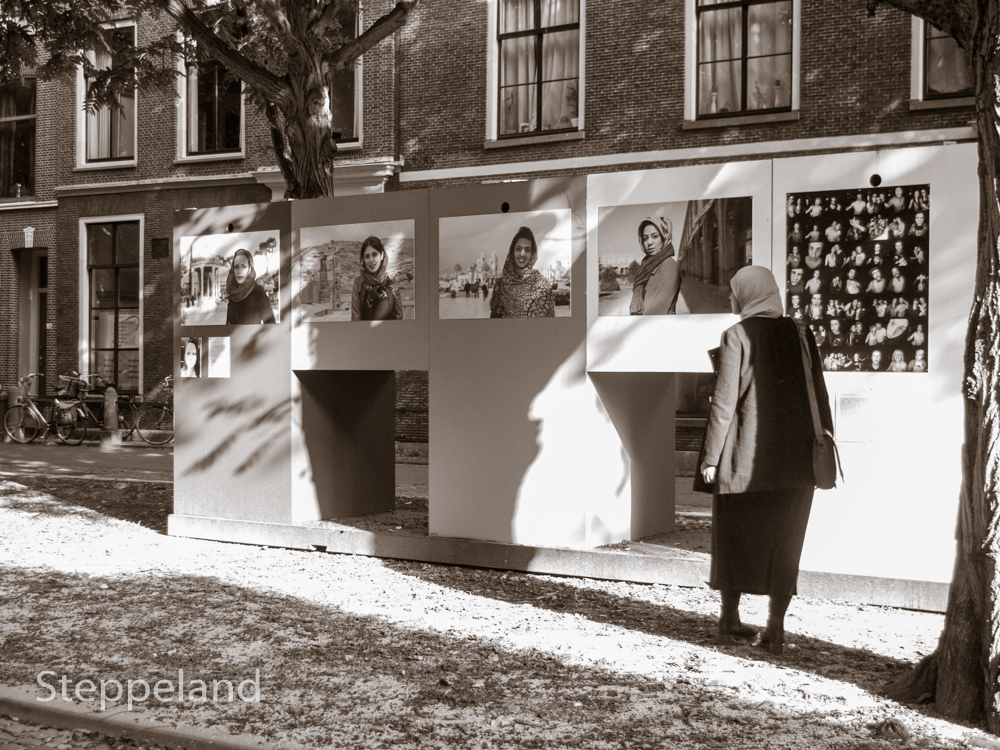
278 international photographers entered their work : more than 1100 unique images. A jury existing of experts from the photography and art world selected 20 talented new photographers. On different locations in Leiden, the open air exhibition leads visitors along 80 of their works.
Noon breakChildren’s play
Inside-outside, darkness and light
Ready to climb
Passing by
Unloading flowersVulnerabilityUltra right reflectionSilent strengthVeiled women
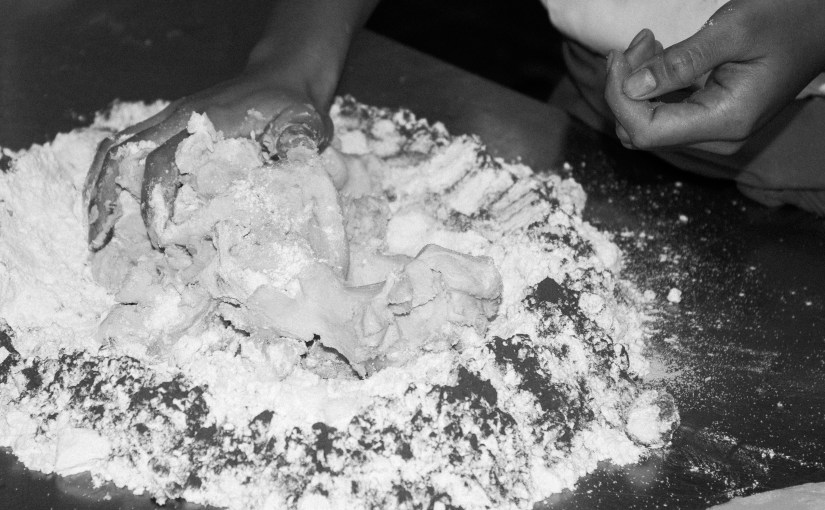
Today it’s time for the third photo from the mini-series I made on the Vocational Trainingmarket in Leiden (*). This time the hands of the young girl who was kneading the bread in the photo here . I turned these photo’s into black and white and added a grain filter. I want to put them together into a collage-poster – by following my blogs you’ll be able to see the step by step process.
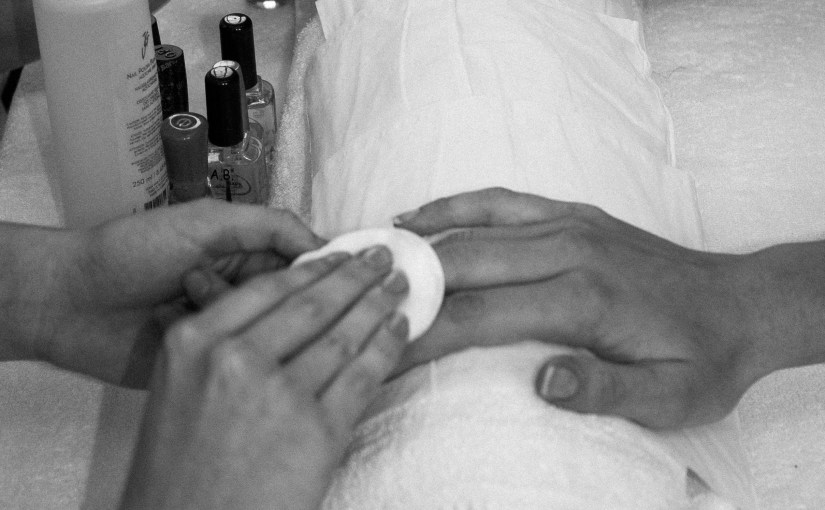
Here is the second photo from the mini-series I made on the Vocational Trainingmarket in Leiden (*). It’s the hands of two young students manicure showing treating the hands of two interested girls. I turned these photo’s into black and white and added a grain filter. I want to put them together into a collage-poster – by following my blogs you’ll be able to see the step by step process.
As I was walking around on the Vocational Training market in Leiden (*) this week, trying to make a photostory of the event, I thought of the idea of making a mini series, focussing on the hands of these young people, showing their skills. This morning, I picked out three of my best ‘working hands’ shots, converted them into black and white, and added a grain filter. I really love them and think I will further work them into a collage or triptych poster. Here’s the first one 🙂
(*)For more info and photo’s of the Vocational Training market, see my previous blog post
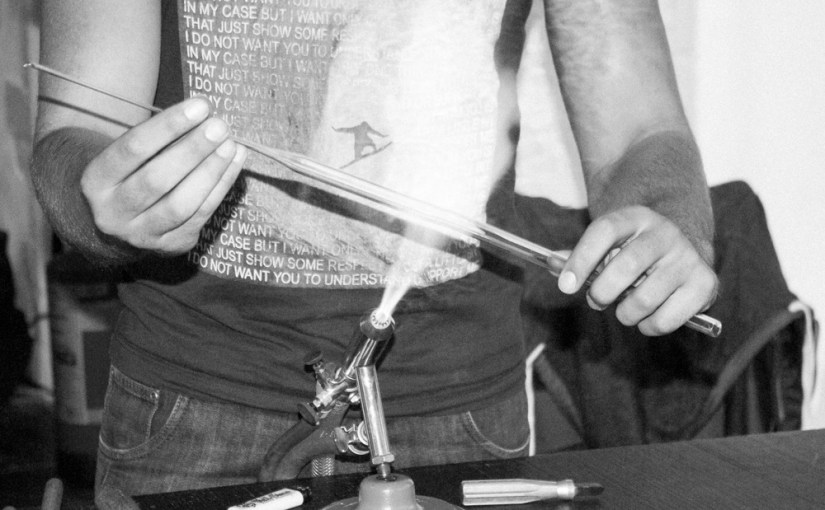
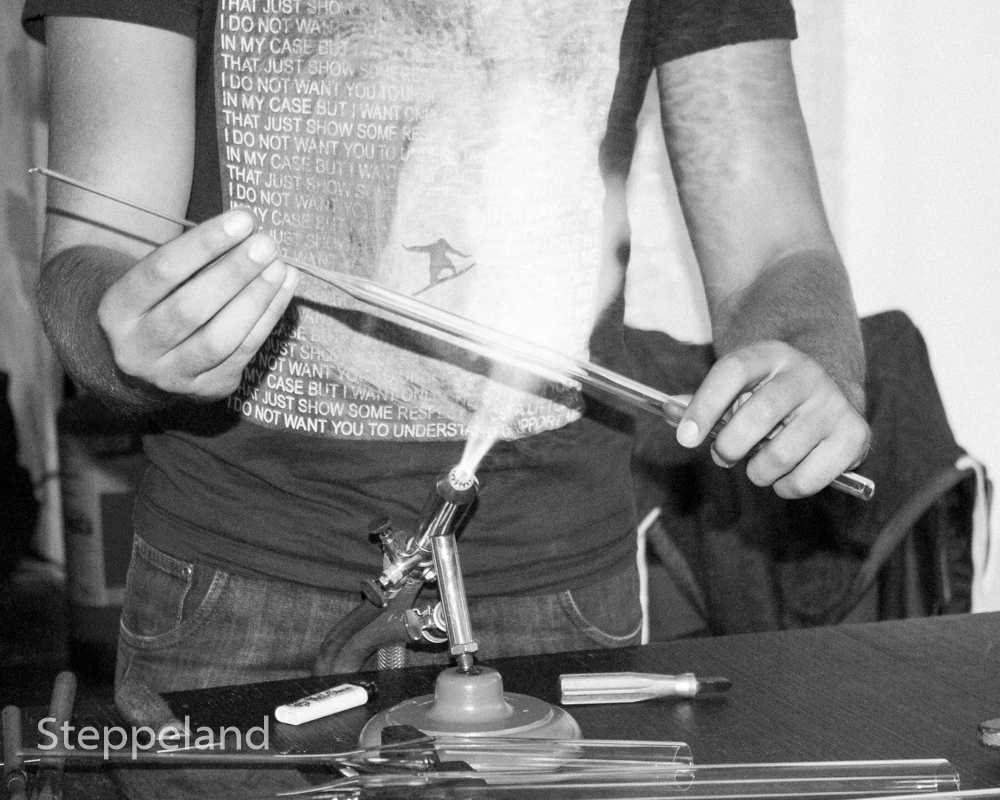
Hands of a boy demonstrating his skills as a precision instrument maker. He’s holding a thin glass pipe into the flame of a burner to melt , bend and shape it
Fun in this photo is to see how the little scater on the T-shirt of the boy seems to be scating along on the heath of the flame…
Yesterday I was in Leiden, a small historic town in the Netherlands. I wanted to make a photo-reportage about the International Photo Festival in Leiden – which I did – but then happened to walk into a totally different event.
On one of the church squares where the displays with photo’s were set up, a large crowd of people had gathered before the entrance of the church. I wondered what was going on, saw a lady with a camera who was obviously a press photographer or reporter, and asked her whether she could tell me more. She told me that in half an hour, the official opening would take place of a two- day info market, in which vocational training schools would present themselves to young potential students, who will soon have to make their choice for a vocational training next year. That sounded quite interesting to me, so I decided to stay around and make a photo-reportage about this event as well.
The total story and a selection of the photo’s I made on the vocational training info-market you can find here on Demotix. I really loved to see how young people who are already in vocational training were eager to demonstrate their skills, and share about it with others.
There were a few more images that just didn’t make it into my Demotix story any more, but I like to show them here:
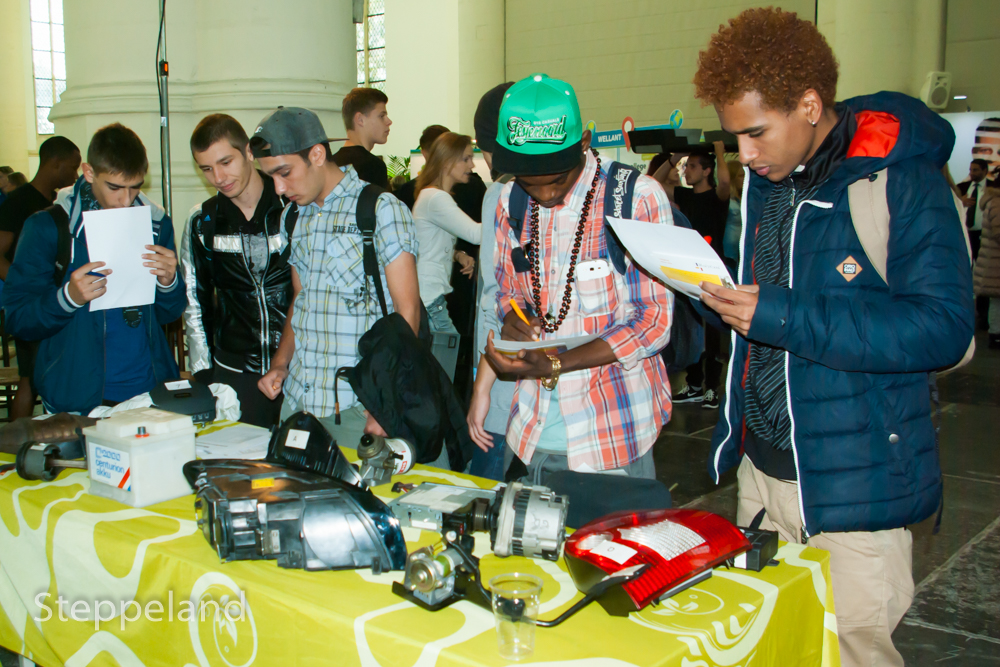
ROC student kneading doughBuilding on a wooden constructionGroup of boys show interest in metal instrument partsParamedics training: first aid can save lives…
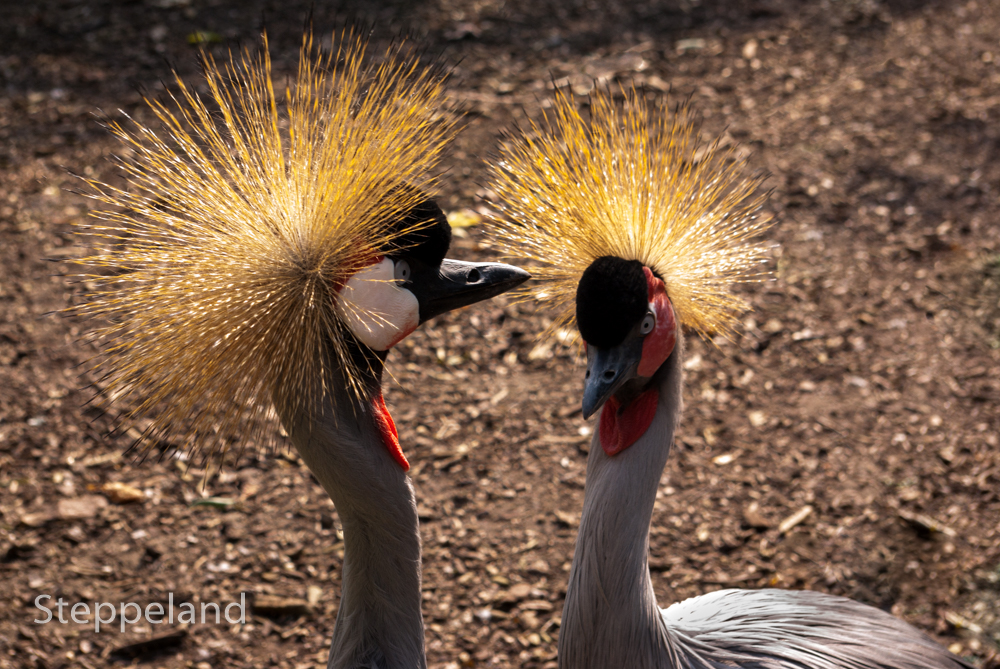
Photo made in ‘de Oliemeulen’ zoo in Tilburg, the Netherlands – Sept. 22, 2014
“Grey crowned cranes (Balearica regulorum) are native to the dry savannah in Africa south of the Sahara, although it nests in somewhat wetter habitats. They can also be found in marshes, cultivated lands and grassy flatlands near rivers and lakes in eastern from the Uganda and Kenya, south to South Africa. This animal does not migrate.
The grey crowned crane has a breeding display involving dancing, bowing, and jumping. It has a booming call which involves inflation of the red gular sac. It also makes a honking sound quite different from the trumpeting of other crane species.
These cranes are omnivores, eating plants, seeds, grain, insects, frogs, worms, snakes, small fish and the eggs of aquatic animals. Stamping their feet as they walk, they flush out insects which are quickly caught and eaten. The birds also associate with grazing herbivores, benefiting from the ability to grab prey items disturbed by antelopes and gazelles. They spend their entire day looking for food. At night, the crowned crane spends it time in the trees sleeping and resting.
The grey crowned crane is the national bird of Uganda and features in the country’s flag and coat of arms.
Although the grey crowned crane remains common over much of its range, it faces threats to its habitat due to drainage, overgrazing, and pesticide pollution. In 2012 it was uplisted from vulnerable to endangered by the IUCN.” Source: Wikipedia
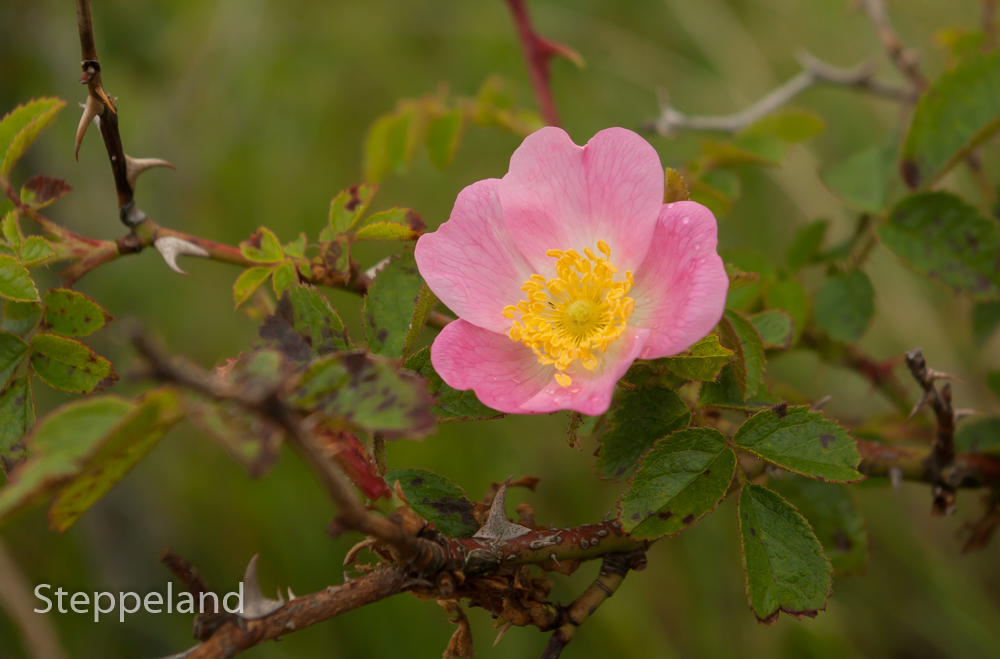
Young, soft pink Eglantine rose with yellow stamens and tiny drops of dew on the petals, on an old and thorny bush… Photo made in North Holland Dunes Reserve, June 8, 2014.
The choice for this image to post today was inspired by a poem of georgetteann : Grief – May this image bring some gentle comfort and hope to anyone who has lost a loved one recently or longer ago – and still silently cries at night about the loss…










 Discovering Beauty