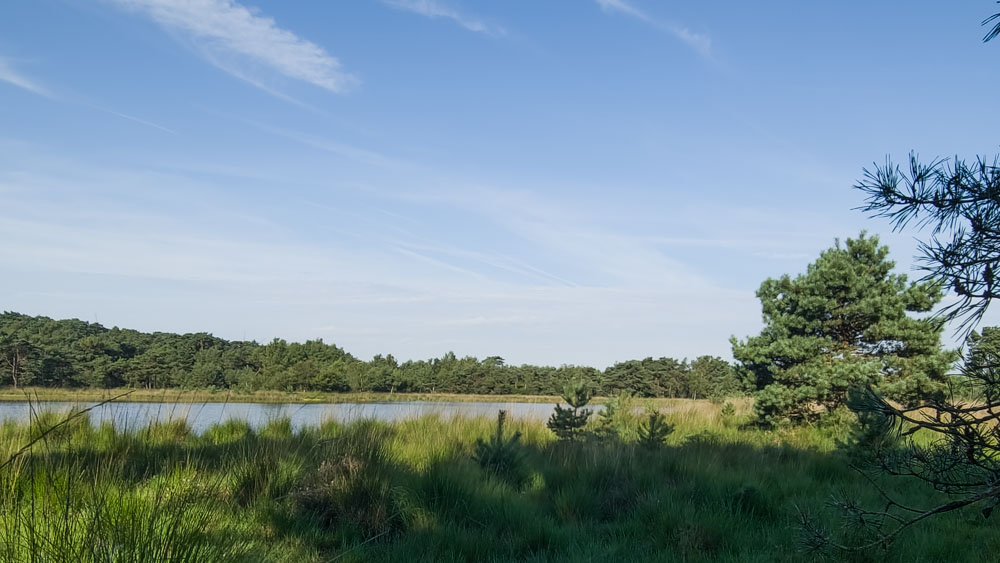
Grenspark Kalmthoutse Heide is a nature reserve located on both sides of the Belgian-Dutch border and covers approximately 60 km². It is characterized by the great diversity in the landscape. This enormous diversity is of great ecological and cultural-historical value. Wide, unspoilt landscapes of heathland, fens, dunes, forests, meadows and polders alternate here. Here rare plants and animals live in peace. It is therefore not surprising that Grenspark Kalmthoutse Heide is part of the Natura 2000 network that sustainably protects the most important nature areas throughout Europe.
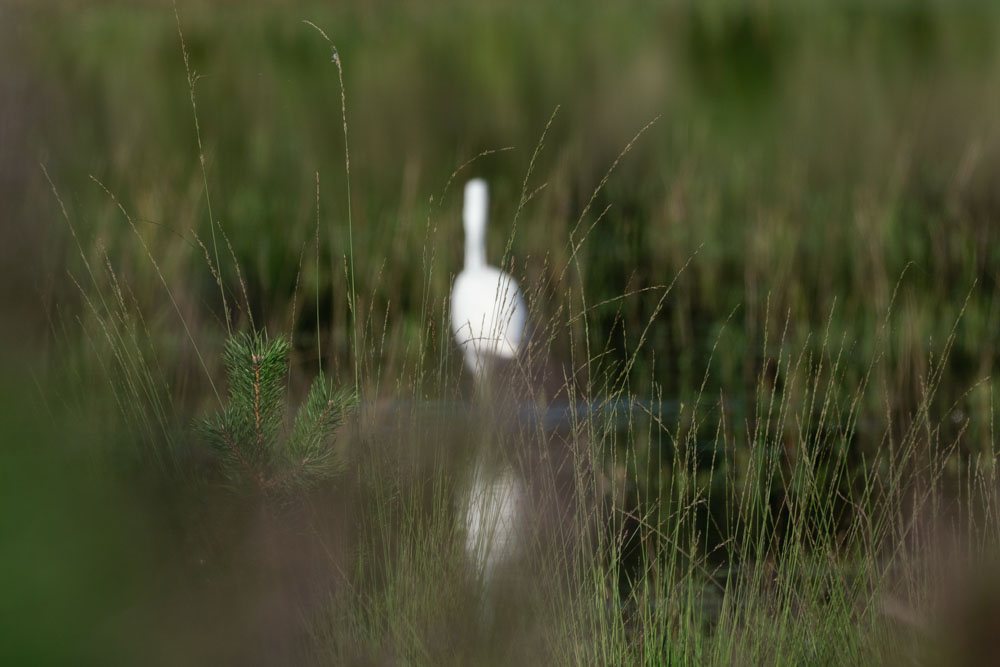
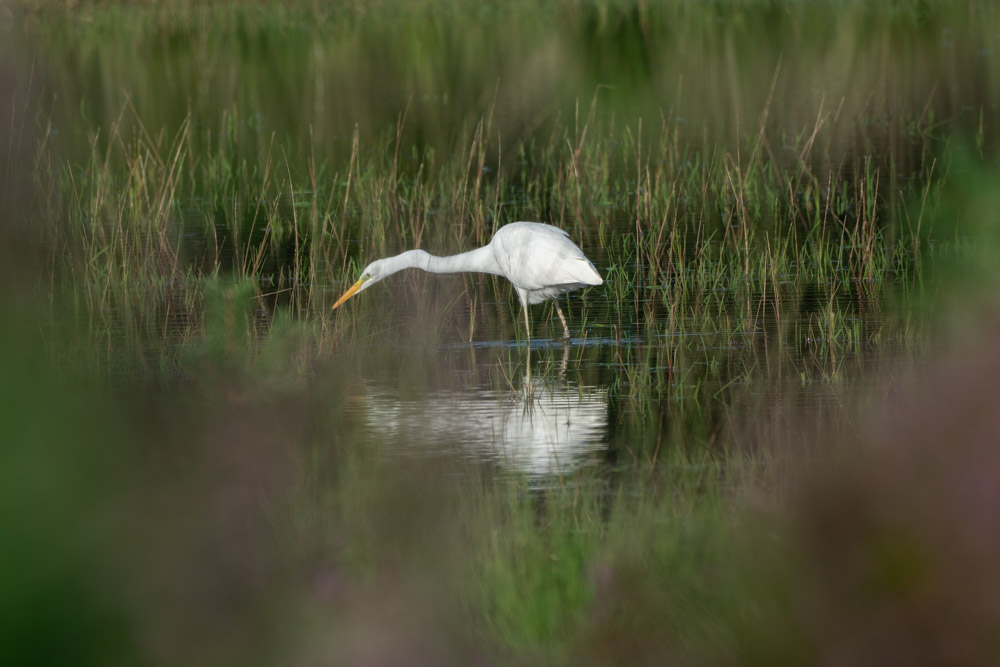
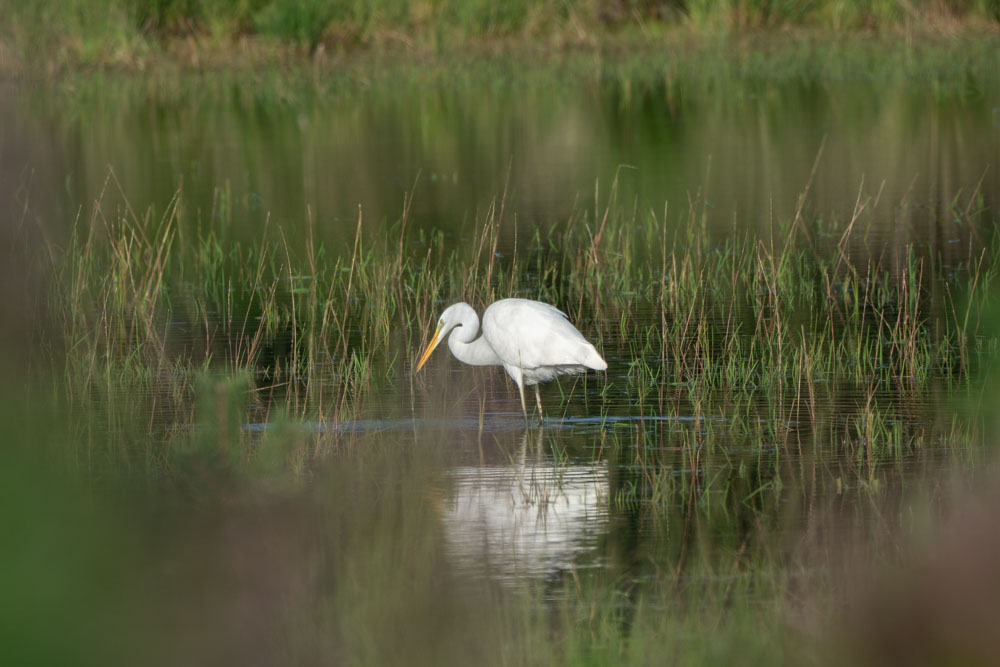
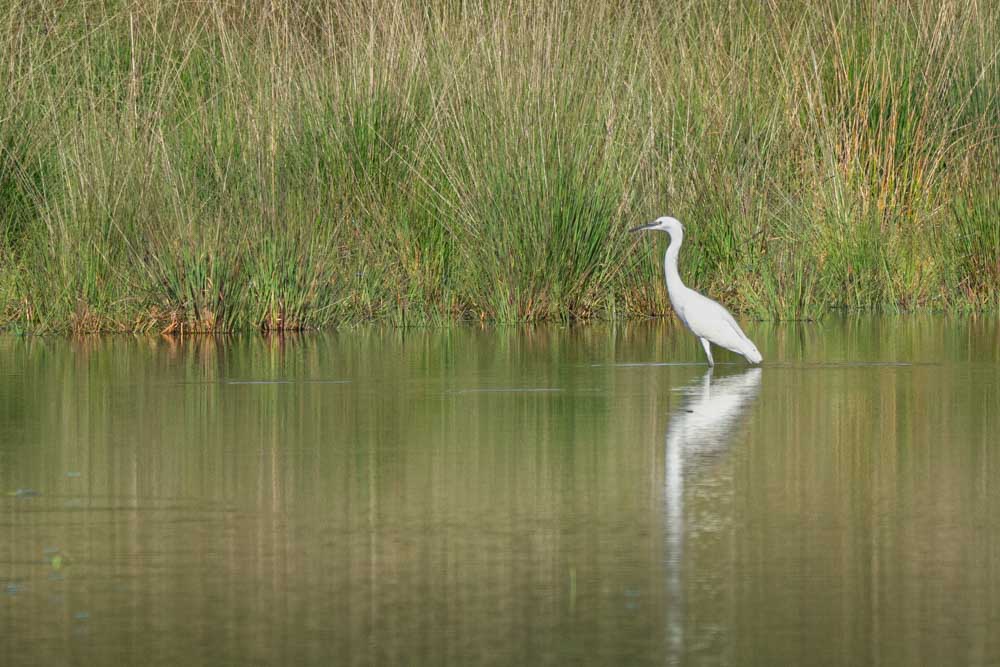
During my walk through the Kalmthoutse Heide this week, I first went to take a look at the Putse Moer, a fen and swampy heathland area. Through the website of observations.be I had already seen in advance that egrets had been sighted there, so I was on my guard. Even before I reached the fen I saw a great egret flying up. On the water I saw another group of birds foraging, but I knew they would be on their gard too. Carefully, staying low behind the bushes I tried to get a little closer, the camera at the ready. The result: a series of photos of the great and little egret, in which the difference between the two species is clearly visible.
On Vogelbescherming.nl we read:
Great Egret,
Western Great Egret, Ardea alba – Herons (Ardeidae)
Great white heron, which can cause little mistake. Long yellow beak and usually black legs. During the breeding season the legs turn red and the beak black for a short period of time. No difference between male and female.
Source: https://www.vogelbescherming.nl/ontdek-vogels/kennis-over-vogels/vogelgids/vogel/great-silver heron

Little Egret
Egretta garzetta – Herons (Ardeidae)
Red list
The little egret is an inhabitant of lagoons, swamps and other areas with shallow fresh or salt water. In the Netherlands, the little egret is rarer than its relative – the great egret.
The little egret is a striking white heron best distinguished from the great egret by its yellow toes, much smaller size and shorter neck. Usually the little egret has a black beak and the great one a yellow one, but this does not always have to be the case.
Source: https://www.vogelbescherming.nl/ontdek-vogels/kennis-over-vogels/vogelgids/vogel/kleine- Zilverreiger


 Discovering Beauty